





For years, the Bay Area has represented the center of California’s innovation economy. However, as housing prices across San Francisco, San Jose, and Oakland continue to strain affordability, a growing number of buyers are redirecting their searches inland. At the top of that relocation list sits Sacramento.
What began as a slow trickle during the early pandemic years has evolved into a sustained migration pattern. Today, Sacramento is no longer viewed as a temporary alternative—it’s increasingly seen as a long-term relocation destination for Bay Area buyers seeking space, stability, and financial breathing room.
The Affordability Gap Driving the Shift
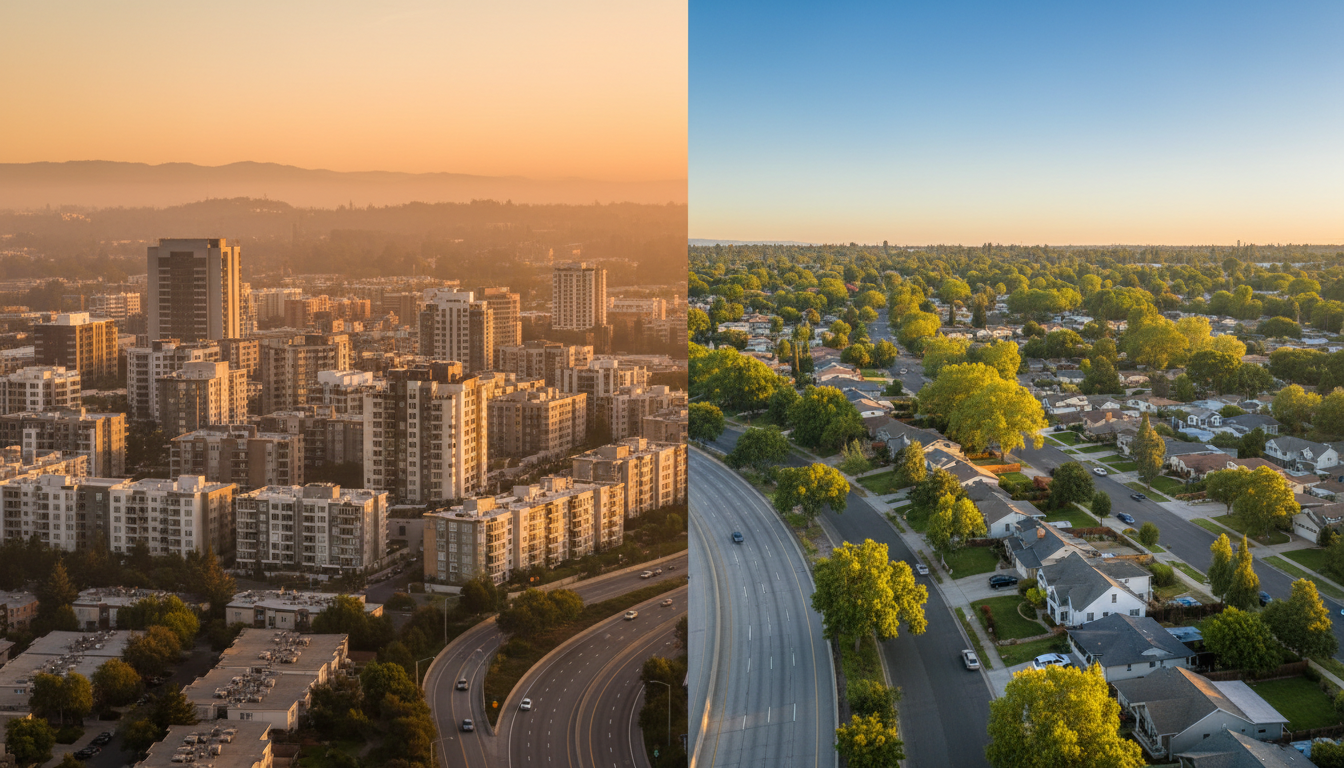
The single most powerful factor behind the Bay Area–to–Sacramento migration is price disparity. In practical terms, the same budget that might purchase a small condo in the core Bay Area often unlocks a single-family home with a yard in Sacramento.
This affordability gap reshapes buyer expectations almost instantly. Buyers who previously had to compromise on square footage, parking, and outdoor space suddenly gain access to features that were financially unreachable just one region over. As a result, Sacramento has become a release valve for accumulated Bay Area housing pressure.
Remote Work Changed the Map Entirely
Before remote and hybrid work became mainstream, proximity to employment hubs largely dictated housing decisions. That geographic tether has weakened.
Now, many Bay Area professionals can work from home full-time or commute only a few days per week. This flexibility dramatically increases the attractiveness of Sacramento, where buyers can secure larger homes without fully disconnecting from coastal job markets.
Instead of asking, “How close am I to the office?” buyers are now asking, “How much space can I afford without sacrificing income?”
Space Has Become the New Luxury
In dense Bay Area metros, space is scarce and expensive. Sacramento reverses that equation. Larger lots, wider streets, and newer suburban developments give buyers room to expand—not just physically, but financially and emotionally.
Home offices, extra bedrooms, garages, and outdoor living areas have become baseline expectations rather than distant upgrades. For families in particular, Sacramento offers the ability to grow without being immediately priced out again.
Lifestyle Without the Pressure
Sacramento’s appeal is not limited to pricing alone. The region offers a blend of:
- Riverfront recreation
- Expansive bike and trail systems
- Neighborhood-based retail corridors
- Access to wine country, Lake Tahoe, and the Bay Area
This mix allows buyers to maintain an active California lifestyle while escaping the intensity and congestion of larger coastal cities. For many transplants, Sacramento feels like a reset—still urban, but without constant compression.
Equity Growth Is Now a Priority, Not Just Ownership
Another major motivator behind the migration is the renewed focus on long-term financial positioning. In the Bay Area, buyers often enter ownership already near the ceiling of their borrowing capacity. In Sacramento, many buyers purchase below their maximum limits.
This creates two strategic advantages:
- Greater monthly financial flexibility
- Stronger long-term equity-building potential
Instead of stretching to the edge just to enter the market, buyers in Sacramento are increasingly able to plan for upgrades, future investments, and multi-property ownership strategies.
Sacramento Is No Longer a Backup Plan
A decade ago, Sacramento was often framed as a fallback location for buyers priced out of the Bay. In 2025, that narrative has shifted. Sacramento is now a first-choice relocation city for buyers prioritizing balance—between affordability and opportunity, between urban access and livability.
Importantly, this migration is no longer limited to one demographic. Today’s Sacramento-bound buyers include:
- Tech workers
- Healthcare professionals
- Government employees
- Entrepreneurs
- Remote-first professionals
- Growing families
The relocation stream is broad, sustained, and structurally supported by workforce trends.
Final Thought: Sacramento Represents California’s Pressure Release Zone
The Bay Area will remain one of the most powerful economic regions in the world. However, as housing costs continue to reset buyer expectations, Sacramento has emerged as one of the most important secondary markets in the state.
It offers what many buyers now want most:
space, stability, and a sustainable cost of living—without exiting California.