




Palo Alto rarely changes overnight. Instead, it evolves carefully, deliberately, and often quietly.
However, when you look closely at current city planning activity, it becomes clear that meaningful infrastructure and land-use changes are already underway. And importantly, these projects reveal how Palo Alto is preparing for future growth without radically altering its character.
So, let’s walk through the most important projects currently moving through the city’s approval pipeline and why they matter for residents, buyers, and long-term investors.
First, Why Palo Alto Development Still Carries Weight
To start, Palo Alto sits at the center of a Bay Area housing market that remains undersupplied and highly selective. Inventory remains tight, buyer demand is uneven, and premium locations continue to outperform.
That broader trend is clearly visible in recent Bay Area market data, where demand concentrates around infrastructure, walkability, and long-term livability rather than rapid expansion.
https://temblog.org/bay-area-housing-market-update-this-week-prices-inventory-buyer-demand/
Because of that, even small projects in Palo Alto tend to have outsized impact.
Via Palou Mall Improvements on Via Ortega
One of the more substantial items currently under review involves grading and site improvements connected to the Via Ortega area near Via Palou Mall.
While this is not a housing project, it signals continued investment in campus-adjacent and institutional land use. These types of improvements often support educational, research, or community facilities, which quietly reinforce Palo Alto’s economic base.
And as history shows, areas tied to institutional stability tend to maintain long-term property value resilience.
https://www.cityofpaloalto.org/Departments/Planning-Development-Services
Infrastructure Upgrades on Alta Road
Meanwhile, a modification to an existing pump station on Alta Road highlights a less visible but equally important trend.
Infrastructure upgrades are foundational. They rarely make headlines, yet they are essential for sustaining density, environmental compliance, and future development capacity.
In fact, cities that invest early in utilities often unlock smoother approvals for later projects. Palo Alto is clearly taking that long view.
Observatory and Telecommunications Updates on Vista Lane
On Vista Lane, multiple applications reflect modernization rather than expansion.
One project focuses on replacing an observatory dome, while another involves modifications to a telecommunications facility.
Together, these point toward a city updating legacy assets to meet modern standards. Improved communications infrastructure, in particular, remains critical in a region defined by technology and research.
And although these changes appear modest, they quietly support Palo Alto’s role as a global innovation hub.
https://www.siliconvalley.org/
Tree Removal and Environmental Balancing
At the same time, applications for tree removal on Middlefield Road and Governors Avenue show the ongoing balance between development and environmental preservation.
In Palo Alto, tree removal is tightly regulated and typically tied to safety, infrastructure repair, or site reconfiguration.
These permits often precede sidewalk improvements, roadway upgrades, or utility work. In other words, they tend to be early indicators rather than isolated actions.
Lot Merger in Los Trancos Woods
A lot merger application in Los Trancos Woods may seem minor, yet it carries real significance.
Lot mergers often suggest long-term ownership consolidation, estate planning, or future redevelopment potential. In low-density, high-value areas like this, even administrative changes can signal confidence in holding land rather than selling.
That mindset mirrors broader Bay Area trends, where property owners increasingly prioritize long-term positioning over short-term exits.
https://temblog.org/bay-area-luxury-homes-keep-rising-while-mid-tier-housing-slips-behind/
New Golf Clubhouse Addition on Vista Lane
Perhaps one of the more visible projects is a new golf clubhouse addition on Vista Lane.
Recreational and community facility upgrades often reflect stable demand and strong local participation. They also enhance neighborhood desirability, particularly in areas where lifestyle amenities drive value as much as location.
In markets like Palo Alto, quality of life investments matter just as much as new housing supply.
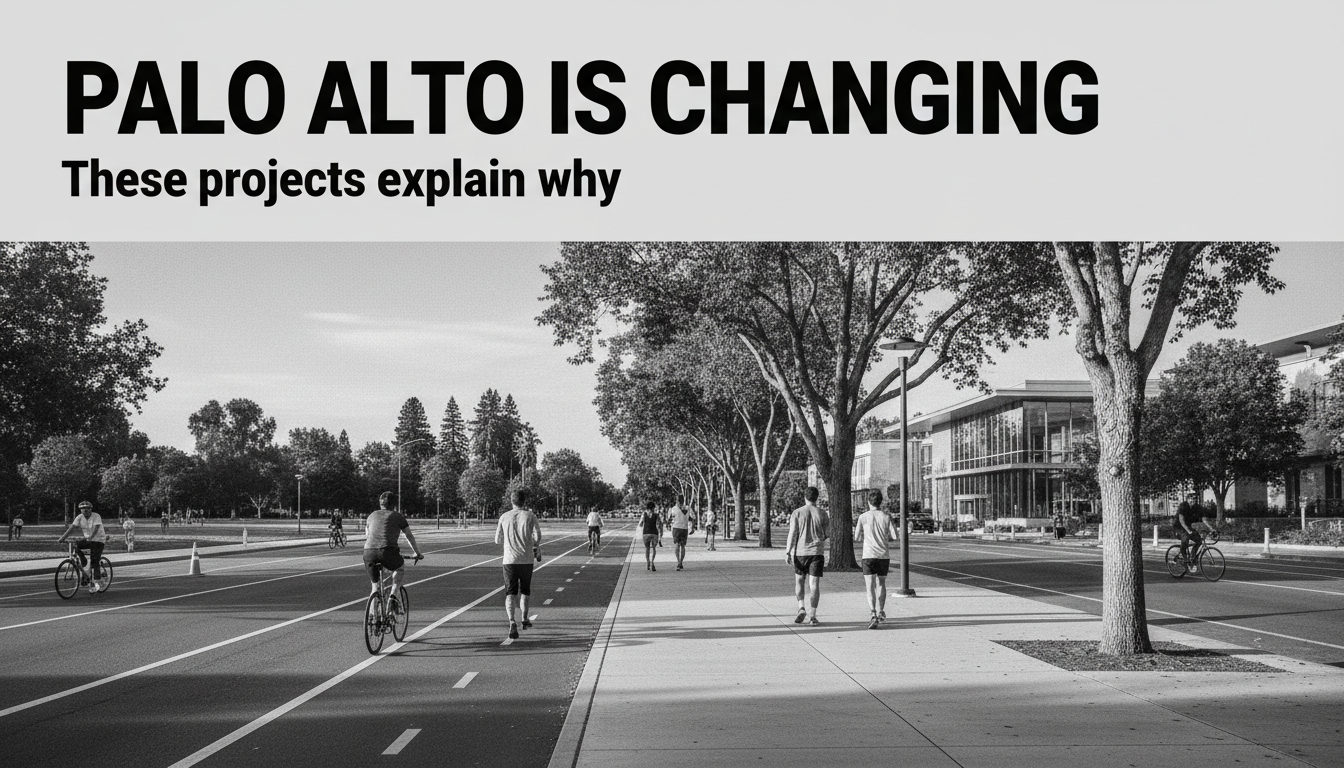
Pedestrian and Bike Pathway on Roth Way
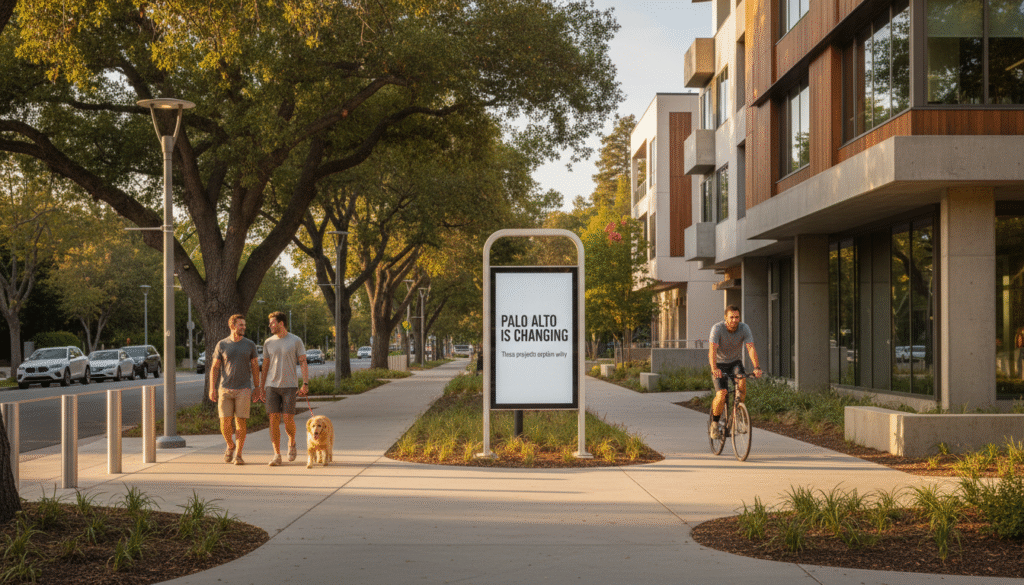
Finally, a proposed pedestrian and bike pathway on Roth Way highlights one of the most important development themes of the decade.
Walkability.
Bike infrastructure.
And human-scale mobility.
Across the Bay Area, cities that prioritize pedestrian access tend to see stronger neighborhood engagement and long-term livability. Palo Alto’s continued focus here aligns with regional planning priorities seen in larger Bay Area redevelopment efforts.
https://temblog.org/the-new-bay-area-5-mega-projects-reshaping-the-real-estate-landscape-in-2025/
How This Fits Into the Bigger Bay Area Picture
When viewed together, these projects tell a consistent story.
Palo Alto is not chasing rapid growth. Instead, it is reinforcing infrastructure, modernizing facilities, and improving quality of life.
That same pattern is visible in surrounding markets as housing pressure pushes demand outward, including places like Gilroy where rents continue to rise as supply tightens.
https://temblog.org/gilroy-rent-trends-december-2025-average-rent-hits-2000/
In short, Palo Alto is playing the long game.
What to Watch Next
Going forward, keep an eye on infrastructure approvals, mobility improvements, and land consolidation activity.
These are often the earliest signals of future shifts.
And in a city like Palo Alto, early signals matter.