





Escrow is one of those real estate terms that sounds intimidating at first.
However, once you understand it, everything clicks.
In fact, escrow is not something to fear. Quite the opposite. It is one of the main systems that keeps buyers and sellers protected during a home sale.
So instead of overthinking it, let’s break escrow down in the simplest way possible.
What Escrow Really Means in Real Estate
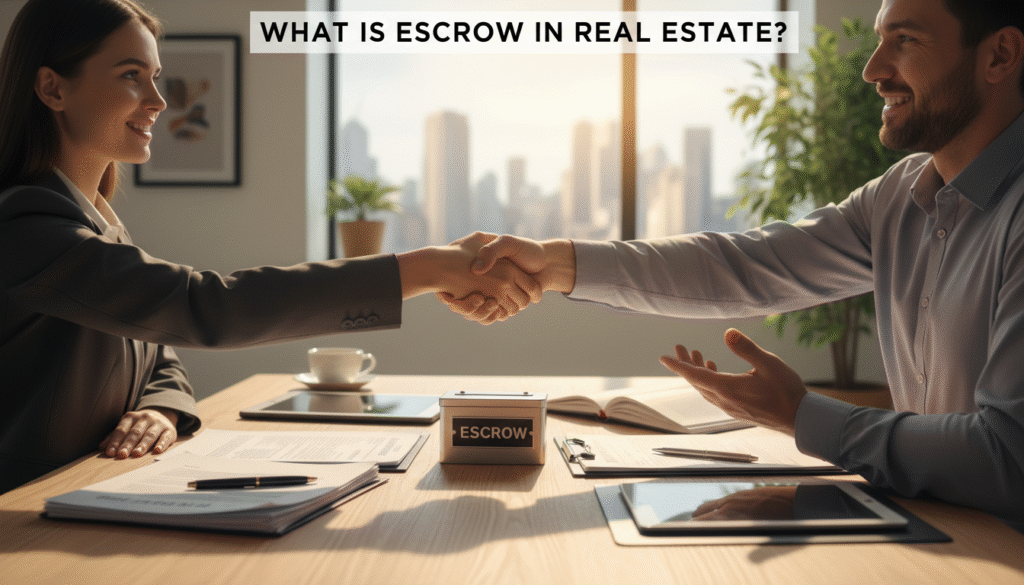
At its core, escrow is a neutral holding process.
During a real estate transaction, money and important documents are placed with a third party. That third party does not work for the buyer or the seller.
Instead, their job is to hold everything safely until all agreed conditions are met.
Only then does the deal officially close.
In other words, escrow makes sure no one gets paid too early and no one gives up ownership too soon.
Why Escrow Exists in the First Place
Real estate involves large amounts of money.
It also involves trust between strangers.
Because of that, escrow acts as a buffer.
It protects buyers from releasing funds before inspections, repairs, or loan approvals are complete.
At the same time, it protects sellers from taking their home off the market without proof that the buyer is serious.
That balance is exactly why escrow matters.
How Escrow Works During a Home Purchase
Once a seller accepts an offer, escrow officially opens.
From there, a neutral escrow officer or company takes over the process.
They hold the buyer’s earnest money deposit in a secure account.
They collect documents such as disclosures and inspection reports.
They track deadlines for contingencies like inspections, appraisals, and loan approval.
Most importantly, they make sure every requirement in the contract is satisfied before anything moves forward.
Once everything checks out, the escrow officer releases funds, records the title transfer, and the buyer becomes the official owner.
Step by step, escrow keeps the transaction organized and fair.
What Is Earnest Money and How Does It Fit Into Escrow?
Earnest money is the buyer’s good-faith deposit.
It shows the seller that the buyer is serious about closing the deal.
This money is placed directly into escrow after the offer is accepted.
If the transaction closes successfully, that money is applied toward the buyer’s down payment or closing costs.
If the buyer backs out without a valid reason, the seller may keep the deposit.
This is another way escrow protects both sides.
Can Earnest Money Be Borrowed?
In many cases, buyers use their own funds for earnest money.
However, in some situations, lenders may allow earnest money to be sourced from loan proceeds.
This often applies to first-time buyers who are still finalizing financing.
Rules vary by loan type and lender, so it is always important to clarify this early in the process.
How Escrow Protects Buyers
Escrow gives buyers leverage and peace of mind.
Imagine a home inspection reveals a serious issue, like an unrepaired roof or plumbing problem.
If the seller agrees to fix it but does not follow through, escrow prevents the seller from receiving any funds until the issue is resolved.
That safeguard alone can save buyers thousands of dollars and countless headaches.
How Escrow Protects Sellers
Sellers benefit just as much.
If a buyer walks away without a valid contractual reason, the earnest money held in escrow can be released to the seller.
This helps offset the cost of lost time, missed opportunities, and ongoing expenses while the home was off the market.
Escrow ensures sellers are not left empty-handed.
What Is a Mortgage Escrow Account?
Escrow does not end at closing.
After you buy a home, your lender may set up a mortgage escrow account.
This account is used to pay ongoing property expenses such as property taxes and homeowners insurance.
Each month, a portion of your mortgage payment goes into escrow.
When tax or insurance bills are due, the lender pays them on your behalf.
This system helps homeowners stay current and avoid missed payments.
What Happens If Escrow Amounts Change?
Escrow accounts are reviewed annually.
If taxes or insurance increase, your monthly payment may go up.
If you overpaid, you might receive a refund or a reduced payment.
While adjustments can be annoying, they are part of keeping your account balanced.
Why Escrow Matters Even More in California
In California, escrow plays an especially important role.
Property taxes, supplemental bills, and local regulations can complicate transactions.
Strong escrow coordination ensures everything stays compliant and on schedule.
This becomes even more important in fast-changing regions like the Bay Area, where new developments are reshaping housing dynamics.
This overview of major Bay Area projects shows how growth and transactions intersect.
At a local level, escrow timelines and expectations can also affect sellers who need to move quickly.
This Gilroy-specific guide offers helpful context for those situations.
Final Thoughts
Escrow may sound technical, but its purpose is simple.
It keeps everyone honest.
It keeps money secure.
And it ensures ownership changes hands only when everything is done right.
Once you understand escrow, the homebuying process becomes far less stressful and far more predictable.
Knowledge turns confusion into confidence.