





Chief Editor: Marcus J. Rowland
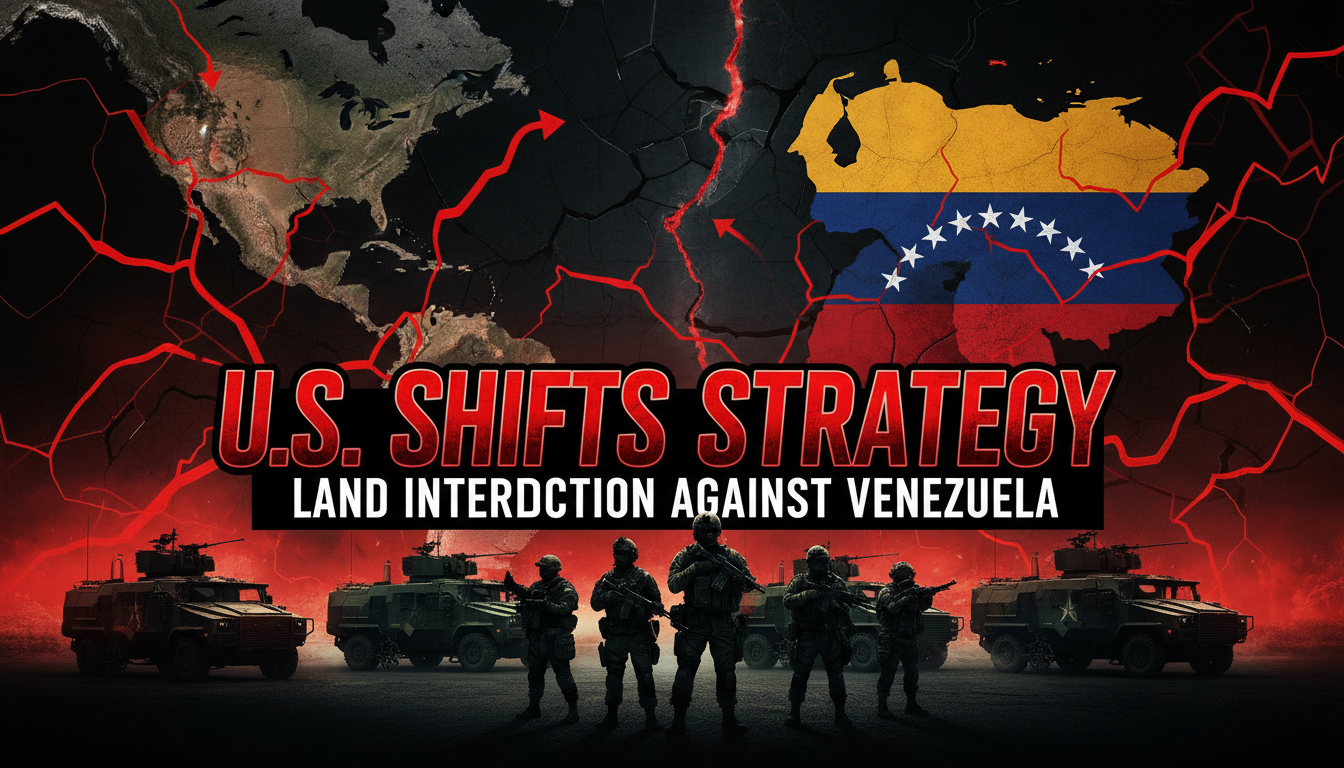
The United States is signaling a sharp tactical change in its approach to countering narcotics flowing from Venezuela into North America.
Recent federal statements outline a new direction — one that turns attention away from open waters and toward land-based interdiction, marking a significant strategic evolution in the country’s fight against cartel trafficking networks.
From Sea to Land — A New Stage in the Drug War
For years, naval interception in the Caribbean and Eastern Pacific dominated U.S. counter-narcotics operations. Officials describe maritime routes as heavily suppressed and increasingly inhospitable for traffickers, with high-intensity patrols eliminating vessel after vessel attempting to breach U.S. waters.
The claim now being emphasized: the sea route is no longer the main battlefield.
Federal leadership asserts that maritime drug shipments have dropped dramatically due to enforcement and strike operations. With ocean corridors squeezed, smugglers are believed to be shifting onto land — and Washington wants to meet them there.
The administration now argues land-based interdiction will be faster, more direct, and more controllable, especially in regions where trafficking networks rely on jungle routes, covert road systems, and border crossings.
Ground Troops Not Ruled Out
One of the most widely discussed aspects of the announcement surrounds the possibility — not confirmation, but possibility — of troop involvement on the ground. When directly questioned about military deployment into Venezuelan territory, leadership declined to reject the option, instead leaving the door open.
In the same period, federal strike data highlights an ongoing air-and-sea offensive. Dozens of vessels have reportedly been taken off the map since September, with multiple lethal engagements documented against criminal organizations operating along Venezuela-Colombia corridors. Intelligence labels two groups as primary targets of these operations.
The broader message: pressure is increasing, and more is coming.
The Framing — “Poison” and National Protection
The administration continues to frame Venezuelan-linked narcotics as a lethal national threat responsible for devastating American communities.
The official rhetoric is blunt — the goal is to stop traffickers at every channel, including by land if that becomes the dominant route.
The language is forceful, confrontational, and final:
Stop sending poison to the United States.
What This Signals Moving Forward
This policy shift suggests several outcomes:
✔ A future where border-land interceptions replace ocean seizures as the front line.
✔ Potential escalation into joint-force operations if trafficking corridors tighten further.
✔ Increased regional surveillance, satellite mapping, and convoy disruption tactics.
While much remains uncertain, one thing is clear — U.S. counter-narcotics strategy is entering a new phase, and Venezuela’s trafficking networks are now being confronted where they move next, not where they once were.