




By Chief Editor Elena Vargas
November 12, 2025
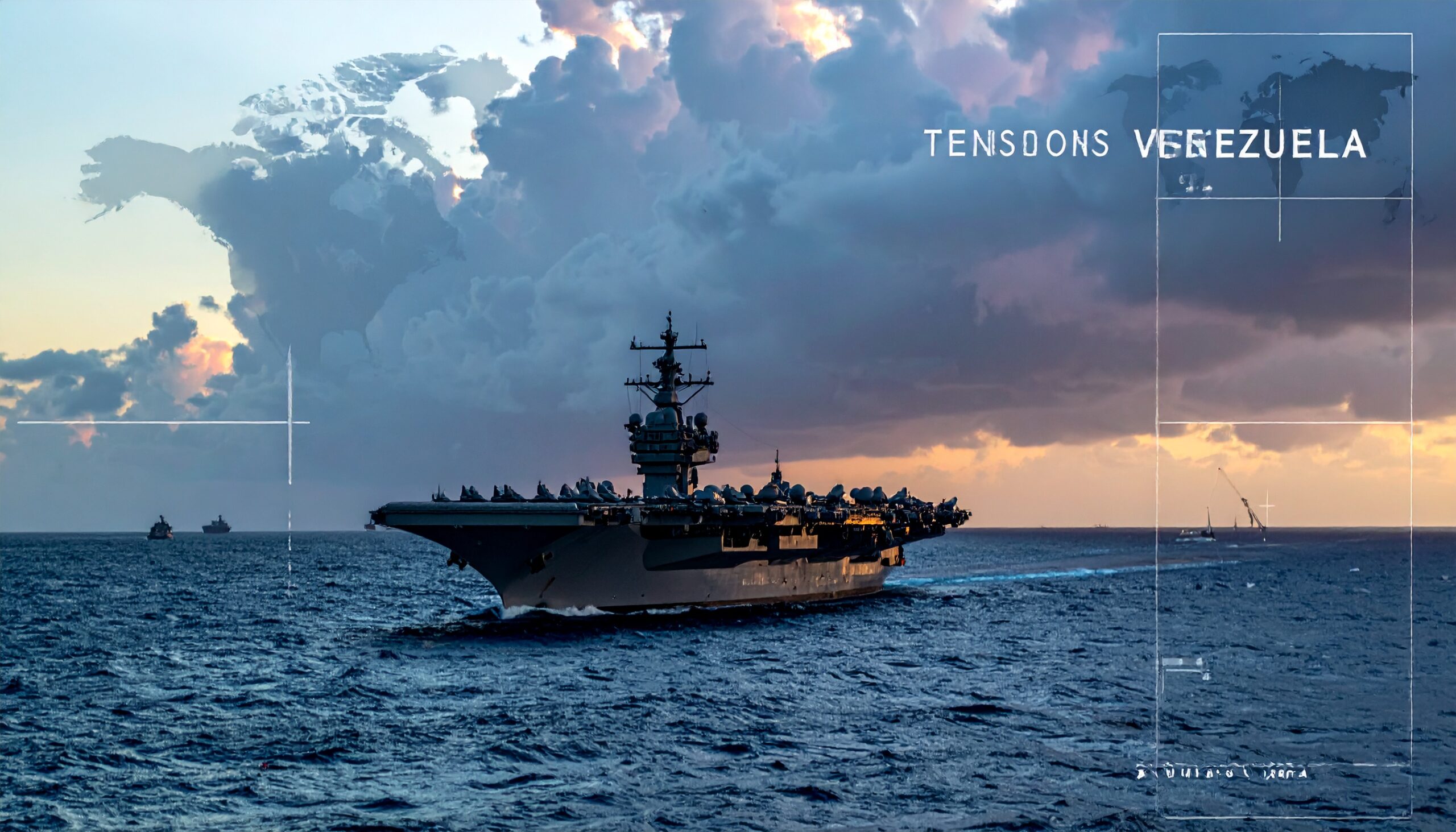
The U.S. Navy’s newest and largest aircraft carrier, the USS Gerald R. Ford, has sailed into the Caribbean as part of a deployment that Washington says targets drug-trafficking networks. The move, however, has accelerated a confrontation that analysts warn could quickly become something much larger. The Guardian
Officials describe the deployment as an extension of a military buildup that began months ago. What began in August as increased patrols and targeted strikes on vessels suspected of trafficking drugs has evolved into the region’s biggest U.S. military concentration in decades, with warships, strike aircraft, drones, marines, and special-forces assets arrayed in theater. The scale and composition of the force have prompted alarm across Latin America and in diplomatic circles. The Washington Post+1
From Show of Force to Imminent Action?
When the buildup first became visible this autumn, some observers thought it was largely symbolic — a display meant to intimidate rather than to initiate combat. James Story, a former U.S. ambassador to Venezuela, expressed that early skepticism. By November, his assessment had changed dramatically. He now says military action is “imminent, without a doubt,” estimating an 80 percent chance the situation will evolve into some form of kinetic operation. Story has publicly floated two options: precision strikes modeled on the Soleimani operation against specific political allies, or a rapid aerial campaign to neutralize Venezuela’s air defenses and command nodes. The Guardian
Not everyone agrees the United States will fire the first shot. Some analysts view the deployment as a calibrated pressure tactic — a psychological operation aimed at spooking Maduro’s inner circle into abandoning him, or provoking a palace coup without a full-scale invasion. That reading sees the Ford’s presence as leverage in a diplomatic and coercive toolkit rather than as the prelude to open warfare. The Guardian
The U.S. Case: Narco-Terrorism and Pressure
U.S. officials frame the operation as necessary counternarcotics enforcement, arguing that certain Venezuelan state actors have facilitated or run trafficking networks that fund destabilizing activities. The Pentagon’s posture and public statements emphasize interdiction and pressure on illicit economy nodes.
Critics counter that the assets on display — including carrier air wings and long-range strike capabilities — far exceed what is reasonable for maritime interdiction. The presence of these forces in proximity to Venezuela has raised fears of miscalculation or escalation, especially given recent strikes on suspected drug-running vessels that resulted in civilian fatalities and regional diplomatic pushback. The Washington Post+1
Reactions in Caracas: Bluster, Bunkers, and Plans
Venezuelan President Nicolás Maduro has publicly responded with a mix of bravado and theater. He joked that the international media have made him “more famous than Taylor Swift,” a quip that underscored both defiance and an attempt to project normalcy at home. Behind the quips, senior regime figures are reported to be nervous, and Venezuelan authorities have mobilized their forces and militias. Barron’s+1
Opposition leaders, by contrast, have signaled they are prepared for rapid transition scenarios. Maria Corina Machado and other opposition planners say contingency plans exist for the first hours and days of a post-Maduro government. Whether those plans could be executed without sparking broader conflict — or a messy security vacuum — is an open question.
Experts Warn of Difficult Aftermath
For analysts who remember the post-invasion chaos in Libya and the protracted insurgency in Colombia, removing an entrenched leader is only the opening act. Benjamin Gedan of the Stimson Center warns that the situation is contradictory: “We are both on the verge of war and on the verge of total normalization of diplomatic ties,” he told reporters, emphasizing the thin line between coercive diplomacy and uncontrollable conflict. Gedan cautions that Venezuela’s scale, factionalism, and the presence of well-armed irregular groups make any post-regime transition fraught and reconstruction enormously complex. The Guardian
Elías Ferrer, a regional analyst, has suggested multiple risky pathways: a Libya-style collapse into factional war, or a prolonged Colombia-like insurgency with armed groups exploiting lawless spaces. Both outcomes would worsen humanitarian suffering and destabilize neighboring countries. The Guardian
Calculating Risk: Why This Deployment Is Different
Several features separate this moment from prior U.S. operations in the region. First, the sheer size and modernity of the Ford and its strike group project a level of firepower that can reach deep inland, far beyond typical maritime interdiction. Second, the inclusion of Reaper drones and specialized helicopter-borne forces introduces options for targeted decapitation strikes or rapid raids — actions with high strategic impact and commensurate risk. Third, the geopolitical environment is fragmented: many regional capitals have condemned unilateral military moves and scaled back cooperation, complicating logistics and intelligence sharing. The Washington Post
What to Watch Next
Three near-term indicators will be telling. One, whether Washington seeks or secures a formal congressional authorization for any strikes that go beyond counternarcotics interdiction. Two, signals from within Maduro’s inner circle — defections or public cracks could tip the balance. Three, the public and private posture of regional governments, especially Colombia and Brazil, where cooperation or pushback will shape any prolonged campaign.
At stake is not only Venezuela’s future but the region’s stability and the precedent Washington sets for using carrier strike groups for coercive diplomacy in its hemisphere.
Closing Thought
The deployment of the USS Gerald R. Ford has made a tense situation unmistakably more dangerous. Whether it functions as leverage, deterrent, or prelude to combat will likely be decided in the coming days. But the consequences — for civilians, for regional politics, and for U.S. foreign policy — will endure long after any headlines fade