





By: Jonathan Merrick, Editor-in-Chief
A New Kind of Payout: The “Tariff Dividend”
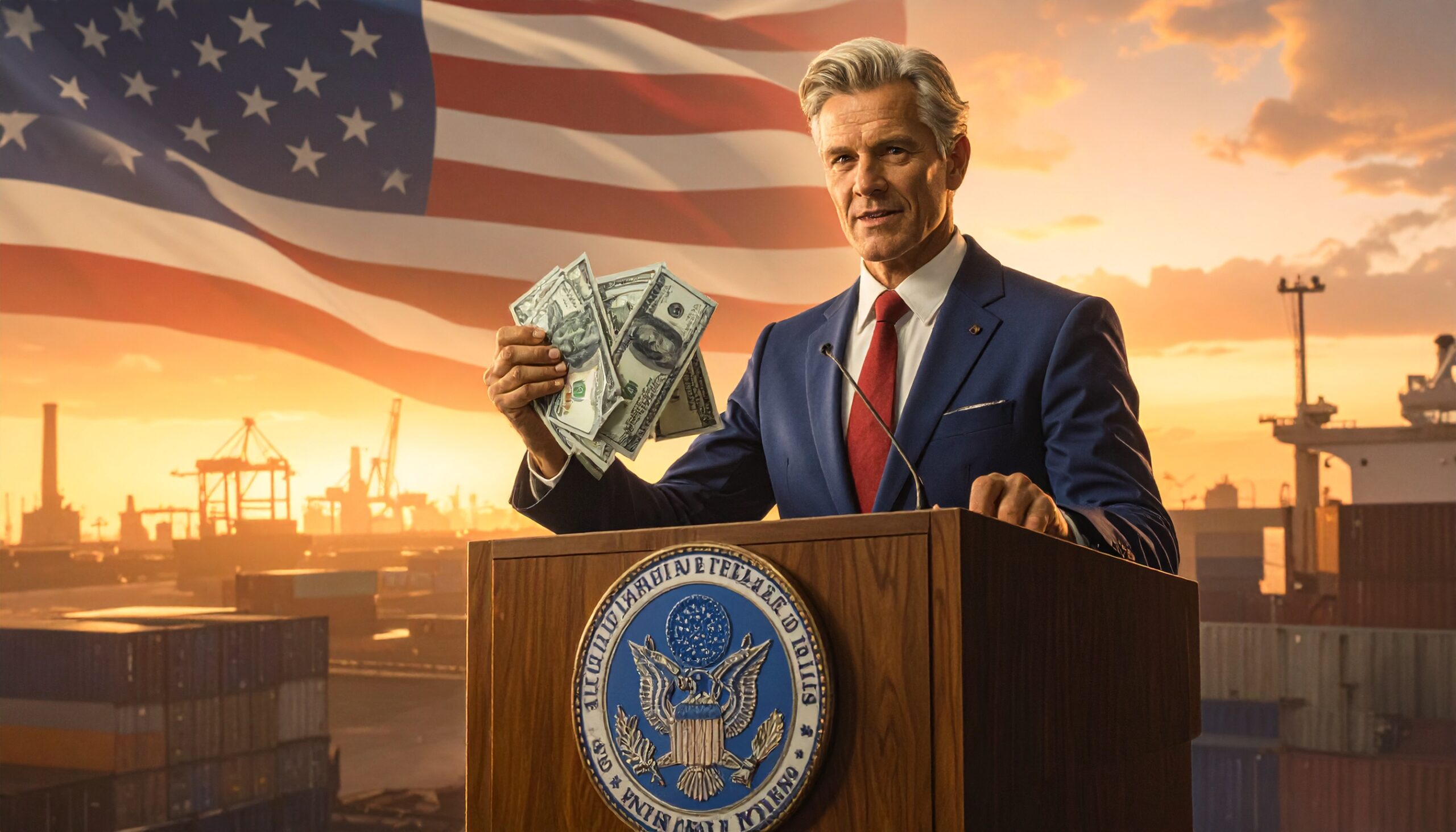
In a surprise announcement that immediately set off a storm of debate in Washington and on Wall Street, President Donald Trump unveiled a proposal to issue what he called a “dividend of at least $2,000 a person” to Americans — excluding what he described as “high-income people.”
According to Trump, the funds would come from the wealth generated by his administration’s tariff policies, which he claimed have strengthened the U.S. economy and positioned the country as “the Richest, Most Respected Nation in the World.”
“This is the people’s money,” Trump declared at a rally in Ohio, defending his controversial trade tariffs. “We’ve built an economy so strong that every American — except for the very rich — deserves a dividend from it. The fools said tariffs don’t work. They were wrong.”
The Proposal in Detail
Under the plan, every eligible American would receive a $2,000 payment described by Trump as a “Tariff Dividend” — a symbolic return of the wealth supposedly generated by tariffs on imports from China and other countries.
The White House did not immediately release details on how eligibility would be determined or how the payments would be funded. However, Trump repeatedly emphasized that “high-income people” would be excluded, a possible nod to populist themes central to his campaign message.
Treasury’s Response: “Unclear on the Mechanics”
Appearing on ABC’s “This Week,” Treasury Secretary Scott Bessent said he had not yet spoken to the president about the proposed dividend. While he did not confirm the idea, he hinted that the administration was exploring tax-based alternatives to direct payments.
“The president has made it clear that he wants working Americans to keep more of what they earn,” Bessent said. “Whether that comes through a dividend, lower taxes on tips, overtime, or Social Security, or even deductibility of auto loans, the goal is the same — to reward work and strengthen the middle class.”
Political and Economic Reaction
Economists and political analysts were divided on the announcement.
Supporters of the proposal framed it as a “people’s dividend” that could return some of the trade revenue to consumers. Critics, however, argued that the U.S. does not collect tariffs in a way that could directly fund such a large payout — calling it “fiscally impossible” without additional borrowing.
Markets reacted cautiously. The Dow Jones Industrial Average briefly rose in early trading before retreating as analysts digested the policy’s unclear funding mechanism.
Meanwhile, political rivals accused the president of election-year pandering, saying the move resembled a campaign giveaway more than an economic policy.
Trump’s Economic Pitch
Trump used the announcement to reinforce his broader message of economic strength, portraying his trade policies as both nationalistic and profitable. He cited low inflation, record stock prices, and soaring 401(k) values as evidence that his administration’s approach had restored America’s global economic standing.
“Other presidents gave our money to China,” Trump said. “I’m giving it back to you — the American people.”
The Road Ahead
As of now, no official executive order or legislation has been introduced. Treasury officials and congressional Republicans are reportedly waiting for clarification from the White House on whether the proposal is intended as a tax reform, a rebate, or a one-time stimulus payment.
Analysts note that if enacted, the plan could cost hundreds of billions of dollars — and that its real-world implementation may hinge on cooperation from Congress, particularly regarding budget appropriations and revenue projections from tariffs.
Still, Trump’s announcement dominated political headlines, reigniting debates over tariffs, populism, and the future of direct government payments.
For now, Americans are left with one question:
Is the “Tariff Dividend” a real economic plan — or a campaign promise wrapped in a populist bow?