





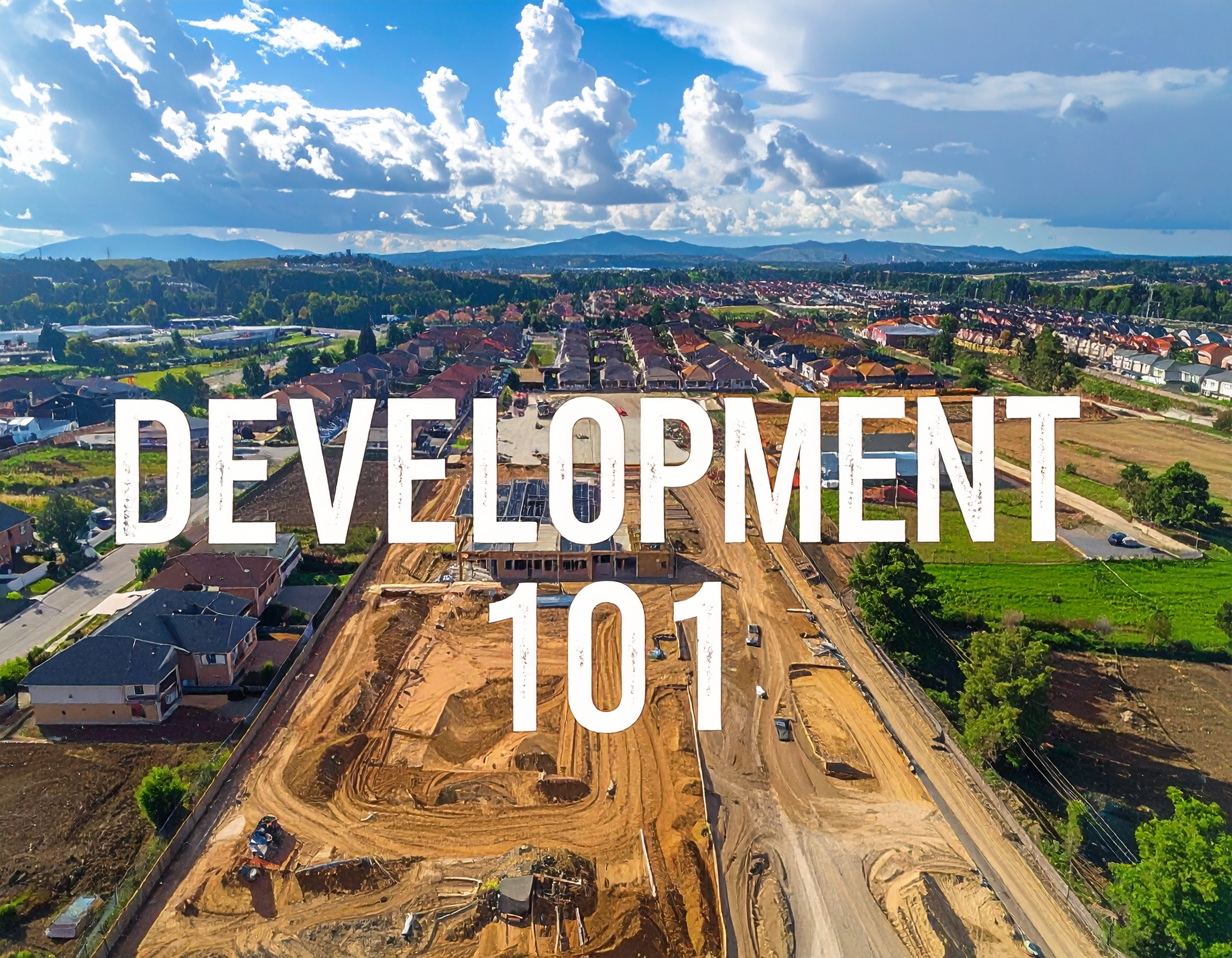
Development insights for first-time builders
Real estate development can feel intimidating at the start. I remember the first time I looked into it and thought it was only for huge firms with endless money. However, the deeper I went, the more I realized development follows patterns anyone can learn.
More importantly, development rewards people who stay curious. If you enjoy learning how cities grow and how deals come together, this field pulls you in fast.
So let’s slow things down and unpack it in a way that actually makes sense.

What Real Estate Development Looks Like in Real Life
In everyday terms, development means taking something underused and making it useful again. That could be empty land, an old building, or even a poorly designed property.
Early on, I assumed development was mostly construction. Eventually, I learned construction is just one chapter. The real work happens before a shovel ever hits the ground.
Because of that, beginners should focus less on building and more on thinking.
Why So Many Beginners Feel Overwhelmed
At first, everything feels connected. Money affects design. Design affects permits. Permits affect timing.
That mental overload causes people to freeze. I’ve been there, staring at spreadsheets while doubting every number.
Still, once you understand the order of operations, the pressure drops. Development becomes a sequence instead of chaos.
Development Starts With Curiosity, Not Land
Most beginners believe the first step involves buying land. In reality, the first step involves asking questions.
Who lives here now? Who will live here in five years? What problem does this property solve?
When I started asking better questions, deals became clearer. Research replaced guesswork.
For broader context on how large markets evolve, I spent time studying macro trends through organizations like the Urban Land Institute at https://uli.org. That bigger picture helped me stop thinking small.
Learning From Markets Before You Invest
Markets leave clues everywhere. Population shifts, job growth, and infrastructure projects all signal future demand.
For example, when I studied how large projects reshape entire regions, it changed how I evaluated small deals. You can see that same pattern playing out right now in the Bay Area, where multiple mega projects are reshaping development priorities in 2025. That kind of insight comes from watching how capital flows, not just where prices sit today. One strong overview breaks this down well at https://temblog.org/the-new-bay-area-5-mega-projects-reshaping-the-real-estate-landscape-in-2025/.
Once you understand those forces, even modest projects feel more predictable.
Location Decisions Shape Everything
Location determines how forgiving a project will be. Strong locations hide mistakes. Weak locations expose them.
Early in my learning curve, I chased cheap land. Later, I realized cheap often meant risky.
Instead, I now look for stability. Access, schools, walkability, and infrastructure matter far more than hype.
Money Feels Scarier Than It Is
Financing stopped me for months when I first explored development. I assumed lenders only wanted seasoned pros.
That assumption turned out wrong. Lenders care about deals more than résumés.
They want realistic costs, clear timelines, and logical exits. Once I framed projects that way, conversations changed.
For a solid breakdown of how development financing works, Investopedia offers plain explanations that helped me connect the dots early on at https://www.investopedia.com.
Budgeting Is Where Beginners Win or Lose
Budgets don’t fail because of math. They fail because of optimism.
I learned quickly to add buffers. Then I learned to add buffers to those buffers.
Construction surprises happen. Permit delays happen. Material costs jump.
Planning for reality instead of perfection protects both money and sanity.
Design Choices Affect Profits More Than Style
Design feels creative, but it’s also financial. Every square foot has a purpose.
When I worked with architects who understood development, layouts improved instantly. Hallways shrank. Storage increased. Natural light improved rents.
Good design doesn’t mean flashy. It means efficient.

Permits Test Your Patience
Permits taught me patience the hard way. No matter how ready you feel, cities move at their own pace.
Instead of fighting the process, I learned to respect it. Planning timelines around permits reduced stress dramatically.
For construction standards and guidance, I often reference the National Association of Home Builders at https://www.nahb.org, especially when sanity checks are needed.
Construction Is Where Leadership Matters
Construction exposes weak communication fast. Missed calls become missed deadlines.
I learned to over-communicate. Weekly check-ins saved thousands.
Clear expectations kept everyone aligned, even when things went wrong.
Exit Strategy Should Exist From Day One
Before construction starts, know how it ends. Selling, renting, or refinancing all require different decisions.
I once watched a project struggle because the exit wasn’t clear. Design choices conflicted with buyer expectations.
On the flip side, I’ve also seen smooth exits when plans matched reality. In fast-moving markets, even sellers who aren’t developers benefit from understanding timing. That’s especially true in areas like Gilroy, where some homeowners explore faster sale strategies discussed at https://temblog.org/sell-your-home-fast-gilroy-3/.
Starting Small Builds Real Confidence
You don’t need massive projects to learn development. In fact, small projects teach faster.
Duplexes, small rehabs, and light renovations build pattern recognition.
Each deal sharpens judgment. Over time, fear turns into experience.
Mistakes That Almost Everyone Makes
Most beginners underestimate time. Others underestimate costs.
However, the biggest mistake involves ignoring feedback. Cities, lenders, and contractors all give signals.
Listening early saves pain later.
Development Is a Skill, Not a Gift
No one is born knowing how to develop property. Everyone learns by doing.
The moment I accepted that mistakes were part of the process, progress accelerated.
Development stopped feeling mysterious and started feeling teachable.
Final Thoughts From Experience
Real estate development rewards patience more than speed.
If you take time to understand markets, respect numbers, and plan exits early, deals improve.
Most importantly, confidence grows with each project. And once it clicks, development becomes less intimidating and far more exciting.