




If you’re waiting for mortgage rates to magically fall back into the 3–4% range… you’re probably going to be waiting a long time.
The good news:
Rates are easing.
The bad news:
They’re likely to stay somewhere in the 6% range for the next couple of years.
Let’s break down what top forecasters are actually saying about 2026–2027, how that affects buyers, sellers, and refinancers, and how to play this market instead of getting frozen by it.

Where Mortgage Rates Are Right Now
As of early December 2025, the average 30-year fixed mortgage rate is hovering around the low 6% range (roughly 6.2%), down from higher levels earlier in the year.AP News
So yes—rates have come down from their peaks.
But no—they are not “cheap” by historical standards.
This current level is basically the starting point for all the 2026 forecasts.
Big-Picture Forecast: 2026–2027 in One Glance
Most major housing and mortgage groups see small declines, not a crash:
- Fannie Mae
- Projects the 30-year fixed to drift down and end 2026 near 5.9%.Fannie Mae+1
- Mortgage Bankers Association (MBA)
- Expects rates to mostly stay in the 6.0–6.5% band through 2026–2027.National Mortgage Professional+1
- National Association of Realtors (NAR)
- Forecast: rates average around 6% in 2026, helping home sales jump roughly 14% as more buyers re-enter the market.National Association of REALTORS®
- Independent forecasts & polls (e.g., Reuters)
- Many see 30-year rates averaging ~6.1–6.2% in 2026 and sliding closer to the high-5% range by 2027.Reuters
So overall:
Best case: high-5% by late 2026 / 2027
Base case: low- to mid-6% for the next couple of years
“Pandemic rates” (3–4%): not on the radar
Why Forecasts Don’t Match (and Why They Keep Changing)
Even the pros don’t fully agree.
Some (like Fannie Mae) see a gradual decline as inflation cools and the Fed keeps trimming rates.Fannie Mae+1
Others (like MBA) think we’re already near the floor, and that rates may just bounce around current levels.National Mortgage Professional+1
Why so much disagreement?
Because mortgage rates depend on a messy combo of:
- Inflation (are prices still sticky?)
- Fed rate cuts (and how markets expect them, not just when they happen)
- 10-year Treasury yields (what investors demand for long-term bonds)
- Economic growth or slowdown
- Global risk, elections, tariffs, and general “market mood”
That’s why one economist’s “6.0%” and another’s “6.5%” can both be reasonable guesses.
Quick Reality Check: The Fed vs. Mortgage Rates
A common misconception:
“When the Fed cuts rates, mortgage rates automatically fall.”
Not exactly.
The Fed sets short-term rates (the overnight rate banks lend at).
Mortgage rates track long-term bond yields, especially the 10-year Treasury.
Yes, Fed policy influences those yields—but it’s not a straight line. Markets often price in Fed moves well in advance.MBA+1
So in 2026:
- If inflation cools steadily
- And the economy slows without crashing
…then Treasury yields can drift lower, and mortgage rates can glide down with them.
But if growth re-accelerates or inflation flares up again?
Rates can bounce right back up, even with Fed cuts in the background.
Will Mortgage Rates Go Down in 2026?
Short answer:
Yes, a bit.
No, not dramatically.
Most credible forecasts suggest:
- 2025: average somewhere around mid-6%
- 2026: easing toward low-6s, maybe high-5s by the end
- 2027: more chances to see rates under 6%, but not a return to 3–4%
Think of it less like a drop… and more like a slow stair-step down.
What This Means If You’re Planning to Buy
A lot of buyers are saying:
“I’ll wait until rates hit 5% before I buy.”
But here’s the catch:
While everyone has been waiting, home prices have kept grinding higher, just at a slower pace. Many forecasts still show modest price increases in 2026–2027, not a nationwide crash.Reuters+1
So waiting for the perfect rate can mean:
- Higher prices later
- More total interest over the life of the loan if prices jump more than rates fall
- Possibly missing out on today’s inventory that fits your needs
A more realistic 2026 game plan:
- Shop payments, not just rates
- Use rate buydowns (temporary or permanent)
- Be open to slightly smaller budgets now, then refinance later if/when rates dip
And importantly: in many markets, bidding wars are softer, so buyers gain back:
- Inspection contingencies
- Appraisal protections
- More negotiation room on price or credits
What This Means If You’re Thinking About Selling
Sellers are stuck in the famous “lock-in effect”:
- Existing mortgages: average rate around 4.3% or lower for many owners
- Today’s buyers: facing ~6–6.5%
That’s a huge psychological and financial jump.
But in 2026, even a modest easing:
- From, say, 6.5% → 6.0%
- Or 6.3% → 5.9%
…can be enough to unlock more buyers and free up move-up sellers.National Association of REALTORS®+1
If you’re a seller, remember:
- You’re almost certainly sitting on a lot of equity if you bought before 2021
- You’ll probably need that equity to offset today’s higher rates on your next mortgage
- 2026–2027 may become the “I’m tired of waiting” window where many owners finally decide to move
Refinance Forecast: Who Actually Benefits in 2026?
This part is simple:
- If your current rate is in the 2–4% range → there is no rate-driven reason to refinance.
- If you bought in 2022–2023 at 6.5–7.5%+ → 2026 could be your first realistic chance to see a meaningful rate drop.
Refinancing might make sense in 2026–2027 if:
- Your current rate is significantly above whatever the market is offering
- You want to shorten your term (e.g., 30-year → 15-year)
- You want to lock in a fixed rate if you’re on an ARM
- You’re reshaping your loan as part of a bigger financial plan
Even then, you’ll have to weigh:
- Closing costs
- How long you plan to stay
- Whether a HELOC or home equity loan is cheaper than a cash-out refiCBS News
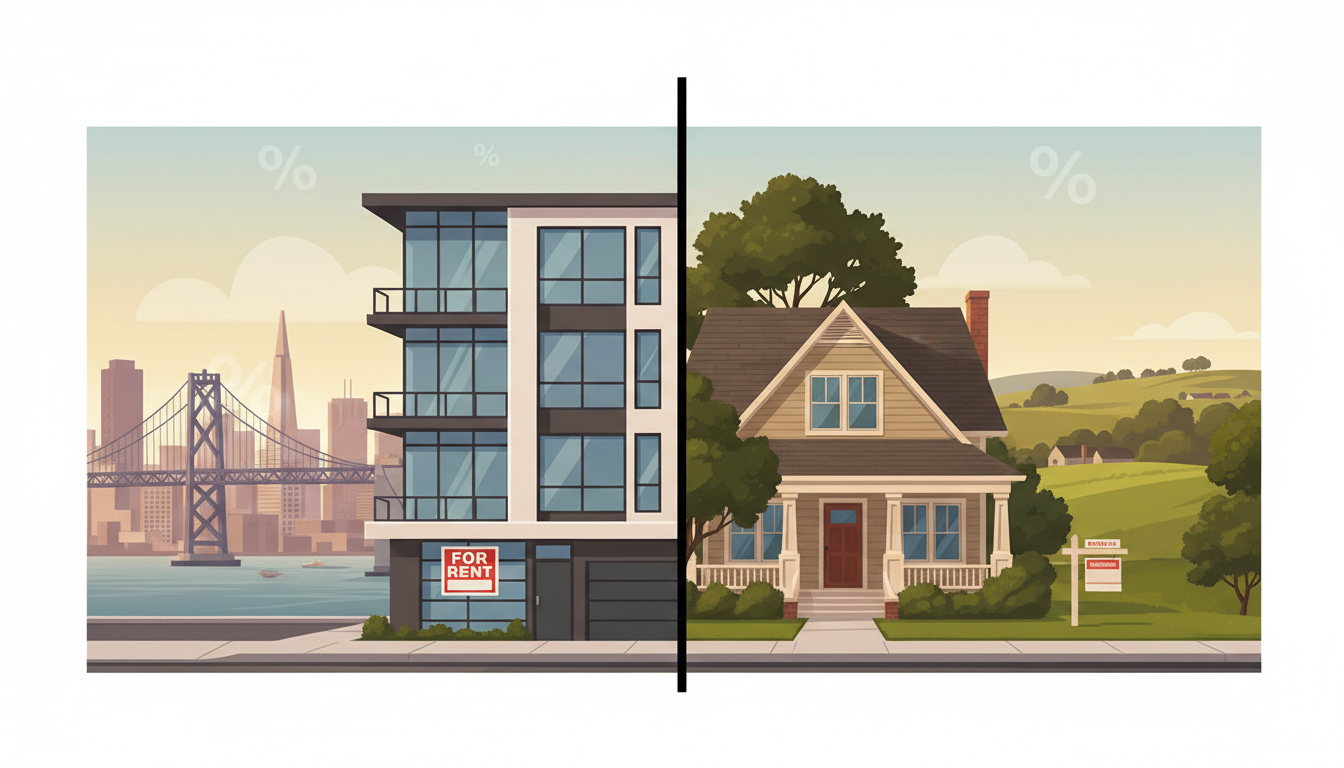
How Mortgage Rates Tie Into Local Markets (Bay Area Example)
Nationally, a 6.1% vs. 6.4% rate difference doesn’t sound huge.
But in high-cost markets, even tiny rate moves can swing affordability.
For example, in the Bay Area:
- Large projects and new developments are reshaping where supply is coming online and how demand adjusts. You can see how that plays out in major regional projects here:
https://temblog.org/the-new-bay-area-5-mega-projects-reshaping-the-real-estate-landscape-in-2025/ - Weekly shifts in prices, inventory, and buyer demand show how buyers react in real time when rates dip or spike:
https://temblog.org/bay-area-housing-market-update-this-week-prices-inventory-buyer-demand/
In markets like this, a move from 6.7% → 6.0% can be the difference between:
- Qualifying vs. not qualifying
- Condo vs. single-family
- Or staying put vs. finally buying
How to Play the 2026 Mortgage Market (Without Going Crazy)
Instead of betting on a specific number—like “I’ll only buy at 5%”—it’s smarter to build a flexible strategy around ranges:
- Know your “max comfortable payment”
- Work backward from the payment, not the home price.
- Model 2–3 rate scenarios
- Example: 6.75%, 6.25%, 5.9%.
- See what each does to your price range and monthly.
- Accept that 6-something may be “the new normal” for a while
- Treat anything below 6% as a bonus, not the baseline.
- Buy when your life needs it, not when the news cycle says so
- Job, family, commute, and stability should drive timing as much as rates.
- Refinance opportunistically, not emotionally
- If rates drop 0.75–1.0% or more below your current rate and you expect to stay put → run the numbers.
Key Takeaways: 2026–2027 Mortgage Rate Outlook
- Yes, mortgage rates are expected to trend lower into 2026–2027.
- No, they are not expected to return to pandemic-era lows.
- Most forecasts cluster around 6.0–6.5%, with a shot at high-5% by late 2026 or 2027.National Association of REALTORS®+3Reuters+3Fannie Mae+3
- Buyers gain more choice and negotiating power, but still face affordability constraints.
- Sellers must navigate the lock-in effect, but growing equity gives them options.
- Refinancers with very high current rates stand to benefit the most if they time it well.
In other words:
We’re heading into a slightly easier, not truly cheap, mortgage world.