





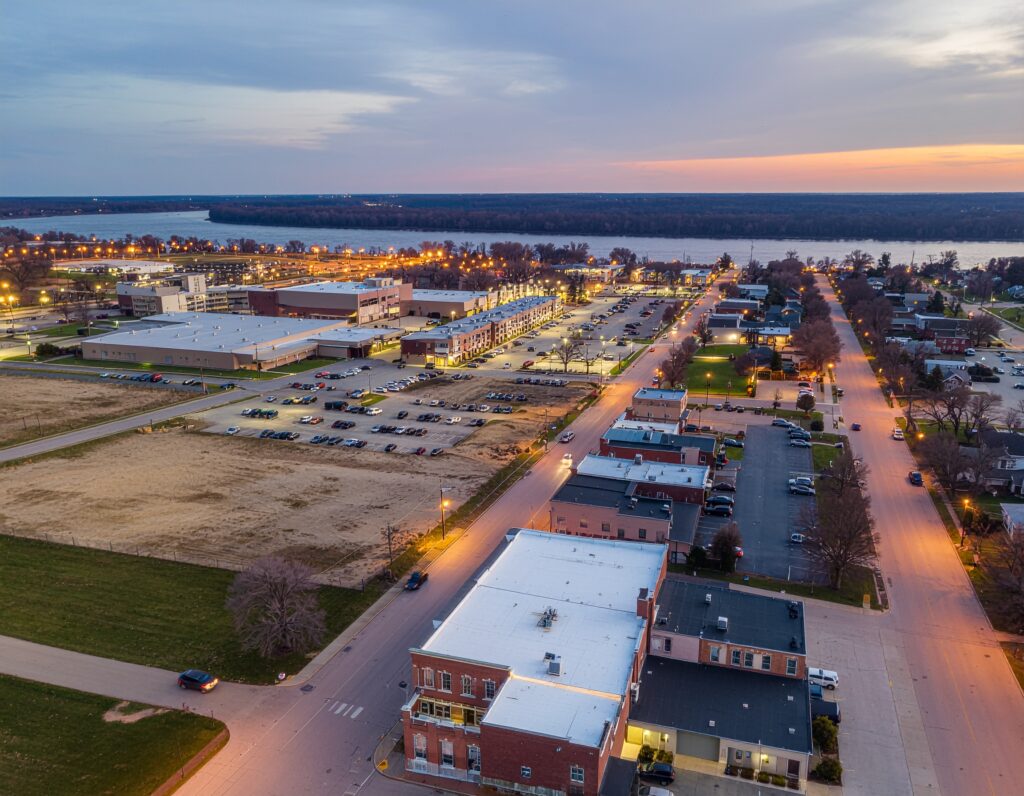
Right now, the Metro-East real estate trends tell a story of contrast. On one hand, historic communities are fighting to survive. On the other hand, massive new developments are moving forward. Meanwhile, investors, city leaders, and residents all pull in different directions.
As a result, this Illinois region just east of St. Louis is becoming one of the most interesting real estate case studies in the Midwest.
Moreover, the changes are happening fast. Therefore, understanding what is being built, what is being saved, and what is being lost matters more than ever.
First, a Historic Black Town Is Fighting to Survive
To begin with, one of the most powerful stories in the region centers on America’s oldest Black town, located in the Metro-East.
At present, the town is described as “dying.” However, the community is actively fighting to prevent it from being paved over and forgotten.
In other words, this is not just about buildings. Instead, this is about cultural survival.
One resident summarized the issue clearly:
“Is it significant? Yes. Is it historical? Yes. Is it neglected? Yes. So, these things should be saved.”
Therefore, while development pressure grows, preservation efforts are intensifying at the same time.
Meanwhile, a Troubled Belleville Strip Mall Gets a Fresh Start
At the same time, in Belleville, a struggling strip mall has officially changed hands.
Specifically, a Florida-based company purchased the property. Previously, the former owner was charged with securities fraud after allegedly misusing $35 million in investor funds.
As a result, the shopping center fell into distress.
Now, however, the new owner plans to:
- Fill vacant storefronts
- Improve property conditions
- Stabilize the retail corridor
Therefore, while one part of Metro-East fights to preserve history, another part is focused on commercial revitalization.
At the Same Time, a Massive Mansion Appears Under $1 Million
Surprisingly, luxury is also part of the story.
In fact, a 9,052-square-foot mansion located on seven combined lots in the Metro-East is listed for under $1 million.
Notably, the property includes:
- Six bedrooms
- Eight total bathrooms
- A massive footprint rarely seen at this price point
Consequently, this listing highlights how distorted pricing still is between coastal and Midwest luxury markets.
By comparison, in California, even smaller luxury homes continue climbing sharply. For example, Bay Area luxury homes keep rising while mid-tier housing slips behind, showing just how different these markets truly are.
Meanwhile, O’Fallon Moves Forward With a $300 Million Development
At the same time, Metro-East is not standing still.
In O’Fallon, developers are moving forward with the $300 million Park Place project, a massive mixed-use development.
Specifically, Park Place will feature:
- Retail space
- Residential units
- Recreational facilities
However, the project only advanced after developers agreed to changes requested by:
- City staff
- Local officials
- Concerned residents
Therefore, even large-scale growth in Metro-East now requires intense negotiation and oversight.
Similarly, this mirrors major development pressure seen elsewhere, such as the Bay Area’s mega-projects reshaping long-term real estate demand.
Meanwhile, a Solar Farm Proposal Sparks a Public Showdown
At the same time, another debate is unfolding in Belleville, but this time inside Mount Hope Cemetery.
A proposal to develop a solar farm on cemetery land has ignited fierce public opposition.
During a heated public meeting:
- Supporters argued for renewable energy progress
- Opponents argued for preservation and respect for burial grounds
- The two sides exchanged pointed criticism
Therefore, Metro-East is now facing a classic land-use dilemma:
Community values vs. renewable energy development
As a result, real estate decisions in the region are no longer just economic. They are now deeply cultural and ethical.
Meanwhile, Belleville Eyes an Upscale Hotel to Boost Tourism
At present, Belleville’s hotel options remain limited.
Currently:
- A Super 8 remains one of the only local lodging choices
- Most national brands cluster along Interstate 64
Because of this, city leaders are now pushing for an upscale hotel within Belleville itself.
The goal is simple:
- Increase tourism
- Attract business travelers
- Support downtown revitalization
Therefore, hospitality growth is now part of the broader Metro-East real estate strategy.
Altogether, These Stories Reveal the Real Regional Pattern
Taken together, these six stories paint a very clear picture.
Metro-East is simultaneously seeing:
- Historic preservation battles
- Commercial recovery efforts
- Luxury pricing anomalies
- Massive mixed-use development
- Renewable energy land-use conflicts
- Tourism infrastructure upgrades
In other words, this is not a stagnant market. Instead, it is a market under transformation from multiple directions at once.
At the Same Time, Housing Pressure Is Still Rising Nationwide
While Metro-East evolves, national housing stress continues.
For example, even smaller California cities are now seeing rental pressure spread outward. One clear case is Gilroy, where average rent recently reached $2,000.
As a result, investors, developers, and retirees are increasingly watching secondary and Midwest markets like Metro-East.
Why Investors Are Studying Metro-East More Closely Now
Because Metro-East still offers:
- Lower entry prices
- Commercial repositioning opportunities
- Large-scale development upside
- Expanding infrastructure
It is now appearing more frequently in regional investment conversations.
At the same time, the blend of:
- Preservation
- Conflict
- Redevelopment
- Tourism growth
Creates both opportunity and risk.
Therefore, due diligence remains critical.
You can also explore broader Midwest market context from sources like:
- U.S. Census Bureau housing data
- National Association of Realtors market reports
- Illinois Economic Development Authority updates
Final Outlook: Metro-East Is No Longer a Quiet Market
Ultimately, the Metro-East real estate trends reveal one key truth:
This region is no longer quietly developing in the background.
Instead, it is now actively balancing:
- History vs. modernization
- Housing vs. renewable energy
- Local need vs. outside capital
- Preservation vs. profit
Therefore, whether you are an investor, resident, or planner, Metro-East now demands serious attention.
Because this is no longer a passive market.
It is a negotiated future in real time.