




Once again, a major retail name is disappearing from a Bay Area shopping center. This time, it’s JCPenney. Moreover, the closure marks another chapter in the long decline of traditional department stores.
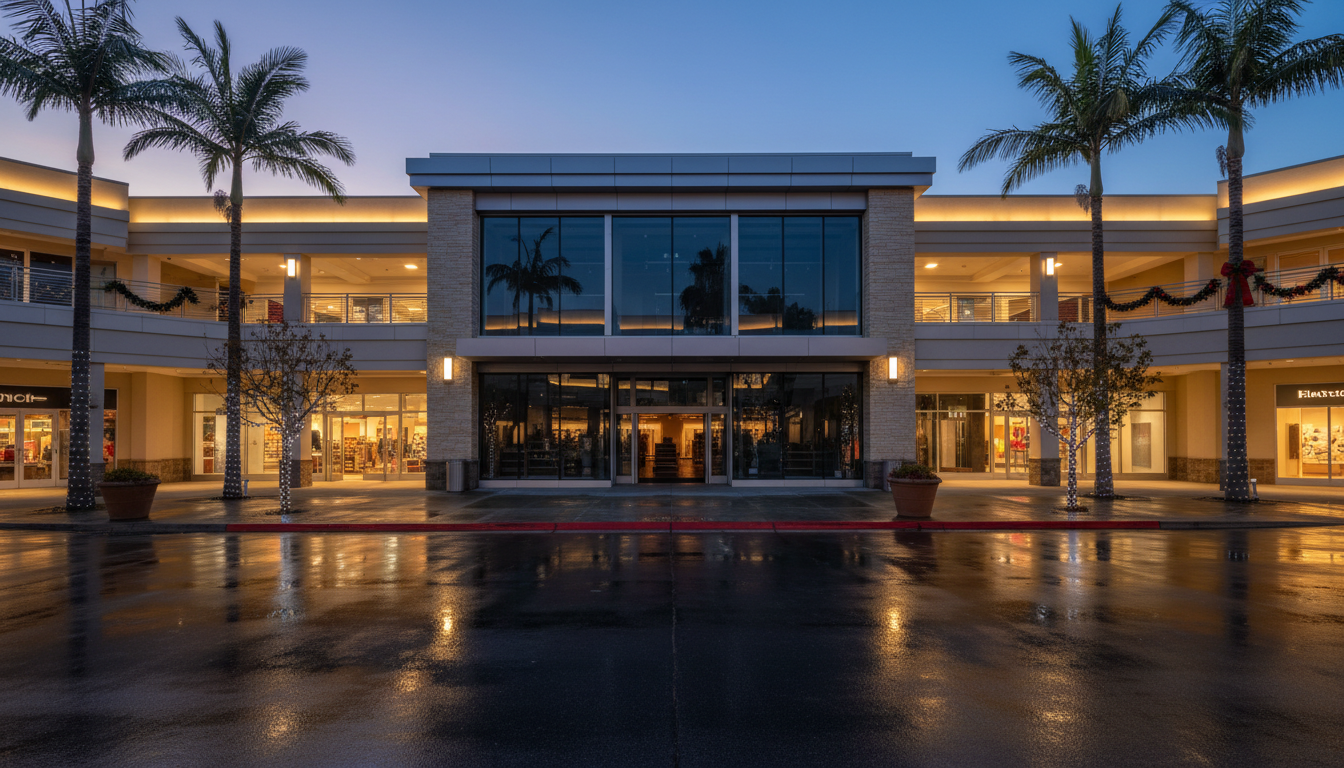
According to SFGATE and KRON4, JCPenney has confirmed that its store at Stoneridge Shopping Center in Pleasanton will officially close after the 2025 holiday season. As a result, the location will shut its doors on February 22, 2026.
Therefore, one of the Bay Area’s last remaining department stores of its kind is now officially on the clock.
Why the Pleasanton JCPenney Is Closing
To begin with, the reason behind the closure is not consumer demand. Instead, the issue comes down to real estate economics.
In a company statement, JCPenney said it was:
“Unable to continue our current lease terms for this store location and have been unable to find another suitable location in the market.”
In other words, the numbers no longer worked.
Therefore, despite steady foot traffic at Stoneridge, lease costs ultimately forced the decision.
How Many JCPenney Stores Are Left in the Bay Area?
As a result of this closure, only six JCPenney stores will remain in the Bay Area:
- Hayward
- Concord
- Antioch
- Fairfield
- San Jose
- Santa Rosa
Meanwhile, another JCPenney location in San Bruno already closed in May.
Consequently, the Pleasanton closure continues a steady contraction across Northern California.
Employees and Shoppers Left in Limbo
At the same time, uncertainty now surrounds the store’s workforce.
While the company did not disclose how many jobs are being impacted, a JCPenney spokesperson said:
“We are grateful to our dedicated associates and the loyal customers who have shopped at our Pleasanton, CA, location through the years.”
Therefore, while shoppers prepare for clearance sales, employees now face an uncertain future.
From Retail Giant to Shrinking Footprint
To fully understand the impact, it helps to look at JCPenney’s long history.
The company was founded in 1902 by James Cash Penney. At its peak in 1973, the chain operated 2,053 stores nationwide.
Today, however, that number has dropped to around 650 locations.
Furthermore, in June 2020, JCPenney filed for bankruptcy protection and announced plans to close more than 150 stores as part of emergency restructuring during the pandemic.
Therefore, while the Pleasanton closure feels sudden locally, it is part of a much longer national pullback.
You can track JCPenney’s national footprint changes through:
https://www.usatoday.com
https://www.retaildive.com
What Happens to the Stoneridge Space Next?
However, the store likely won’t sit empty for long.
A representative for 300 Venture Group, the private real estate firm that owns Stoneridge Shopping Center, told the Pleasanton Weekly that they are:
- Close to finalizing a lease
- With a new-to-market tenant
- That would be considered a notable first for the area
Even more importantly, the firm added that:
“Demand for space across the center continues to be solid.”
Therefore, while JCPenney is leaving, redevelopment appears to be already underway.
Stoneridge Mall Now Has Only One Major Anchor Left
With JCPenney gone, the mall’s anchor situation becomes even thinner.
At present:
- Sears closed in 2018
- Nordstrom closed in 2020
- JCPenney will close in 2026
That leaves Macy’s as the only remaining traditional department store anchor at Stoneridge.
As a result, the mall is now officially transitioning away from classic big-box retail.
This Closure Reflects a Larger Bay Area Retail Shift
At the same time, this is not happening in isolation.
Across the Bay Area:
- Large retail footprints are shrinking
- Malls are being repositioned into mixed-use centers
- Entertainment, dining, and residential uses are expanding
This mirrors broader redevelopment pressure across Northern California. For example, large-scale projects are already reshaping land use and commercial demand across the region:
https://temblog.org/the-new-bay-area-5-mega-projects-reshaping-the-real-estate-landscape-in-2025/
Meanwhile, rising living costs continue spilling outward from core metros. In Gilroy, for instance, average rent recently crossed $2,000:
https://temblog.org/gilroy-rent-trends-december-2025-average-rent-hits-2000/
At the same time, elite capital continues clustering at the top of the market:
https://temblog.org/bay-area-luxury-homes-keep-rising-while-mid-tier-housing-slips-behind/
Therefore, the retail collapse, housing pressure, and redevelopment wave are all connected.
What This Means for Pleasanton
For Pleasanton itself, the implications are mixed.
On one hand:
- A legacy retail brand is disappearing
- Jobs may be lost
- Long-standing shopping habits will shift
On the other hand:
- A new high-profile tenant is expected
- Foot traffic may stabilize or even improve
- Property owners gain flexibility for repositioning
Therefore, the closure is not purely negative. Instead, it represents another stage in the evolution of Bay Area malls.
Final Takeaway: Another Retail Era Quietly Ends
Ultimately, the Pleasanton JCPenney closure is not just about one store.
It represents:
- The continued collapse of traditional department store retail
- The rising pressure of Bay Area lease economics
- The broader shift toward experience-based and mixed-use retail
- And the steady reshaping of suburban commercial real estate
While JCPenney once dominated American shopping culture, its retreat from malls like Stoneridge shows just how fast the retail landscape is changing.
And clearly, that change is far from over.