




Property taxes are not exciting.
However, in California, they are impossible to ignore.
Whether you are buying your first home or already own property, understanding how California property taxes work can save you money, stress, and unpleasant surprises later.
So instead of overcomplicating things, let’s walk through the system clearly, calmly, and step by step.
Why Property Taxes Matter More Than You Think
At first glance, property taxes feel like a background expense.
They are not.
They directly affect your monthly housing costs, your long-term budget, and even how affordable a home truly is.
In California, property taxes are structured in a way that rewards long-term ownership, but they can surprise new buyers who are not prepared.
Once you understand the rules, everything becomes far more predictable.
How California Property Taxes Are Calculated
California property taxes are shaped by Proposition 13, which was passed in 1978 and still defines the system today.
This is where things actually become homeowner-friendly.
Here is how it works.
When you buy a home, your purchase price becomes the assessed value.
From that point forward, the base property tax rate is 1 percent of that assessed value.
Even more importantly, annual increases in assessed value are capped at 2 percent per year.
That cap stays in place as long as you continue owning the property.
However, there are two key exceptions.
A change in ownership resets the assessed value.
New construction can also trigger a reassessment.
On top of the base rate, local voter-approved bonds and special assessments may be added. These vary by city and county, which is why taxes differ even between nearby neighborhoods.
This structure explains why longtime homeowners often pay far less in taxes than recent buyers of similar homes.
When California Property Taxes Are Due
Now comes the part that often confuses people.
California property taxes follow a fiscal year calendar, not a standard calendar year.
Payments are split into two installments.
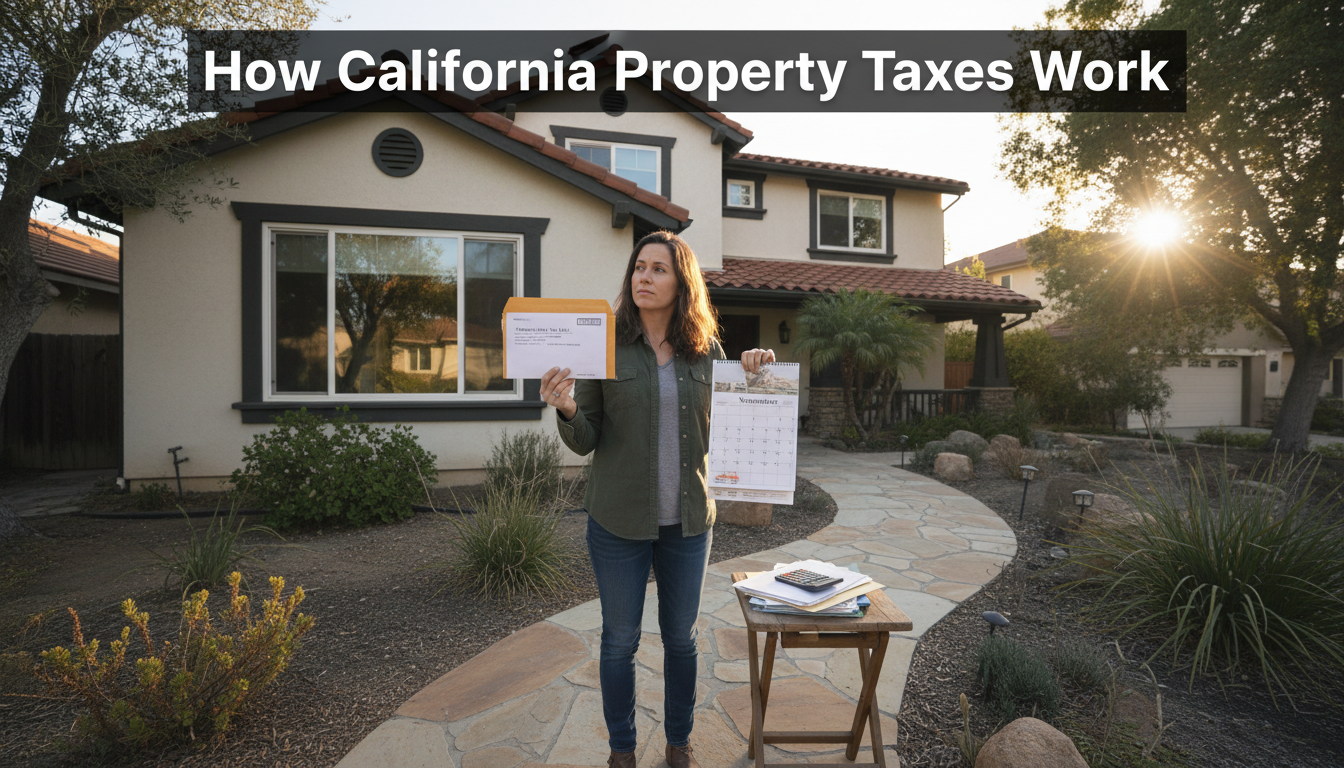
The first installment is due November 1 and becomes delinquent after December 10.
The second installment is due February 1 and becomes delinquent after April 10.
Missing these deadlines triggers penalties, so timing matters.
Because of this, many homeowners choose to use an escrow or impound account through their mortgage lender, allowing taxes to be paid automatically.
That option can remove a lot of mental load, especially for first-time buyers.
What Are Supplemental Property Taxes?
This is where most surprises happen.
And yes, almost every new buyer experiences it.
Supplemental property taxes occur when a home changes ownership.
Here is why.
The previous owner likely had a much lower assessed value due to Proposition 13 limits.
Once you purchase the property, the county reassesses it based on your purchase price.
The difference between the old assessment and the new one must be collected.
That difference shows up as a supplemental tax bill.
This bill is completely normal.
It is also separate from your regular property tax bill.
What to Know About Supplemental Tax Bills
Supplemental bills usually arrive several months after closing.
Sometimes it is one bill.
Sometimes it is two, depending on when the purchase occurred within the fiscal year.
These bills are not included in your lender’s escrow account.
That is why buyers often feel caught off guard.
Planning ahead makes all the difference.
Budgeting for supplemental taxes during your first year of ownership can prevent stress and late fees.
Why Understanding This Matters
Once you understand California property taxes, a lot of anxiety disappears.
You avoid penalties.
You budget more accurately.
You stop panicking when unexpected mail arrives from the county.
Most importantly, you gain control over one of the largest ongoing costs of homeownership.
That clarity matters even more in markets where affordability is already stretched.
Local Real Estate Context Matters Too
Property taxes do not exist in a vacuum.
They interact with housing prices, development, and long-term market trends.
In regions like the Bay Area, large-scale projects and zoning changes influence values and future tax bases.
This overview of major Bay Area developments shows how infrastructure and housing growth shape ownership costs over time.
At the local level, understanding tax implications becomes especially important for homeowners making decisions about selling or relocating.
This Gilroy-specific guide offers a practical example of how local conditions influence timing and costs.
Final Thoughts
Property taxes may never be exciting.
Still, in California, they are manageable once you understand the system.
Proposition 13 creates predictability.
Payment schedules are fixed.
Supplemental taxes are temporary, not permanent.
With the right expectations and planning, property taxes stop being stressful and start becoming just another line item you control.
Knowledge removes the fear.