





Written by Michael Trent, Chief Political Editor
November 11, 2025
Senate Passes Stopgap Funding Bill After Intense Negotiations
The United States Senate narrowly passed a short-term government funding bill late Monday night, November 10, in a tense 60–40 vote that immediately set the stage for a heated showdown in the House of Representatives.
The legislation, designed to keep the federal government running through January 30, 2026, also includes provisions to fully fund select federal agencies through the rest of the fiscal year. Lawmakers framed the deal as a necessary “pause” to prevent deeper economic fallout, even as critics on both sides accused the opposing party of capitulation.
The vote breakdown highlighted the fragile state of bipartisanship in Washington: eight Democrats joined nearly all Republicans to move the bill forward, while Senator Rand Paul was the lone Republican to oppose it.
Among Democrats, those voting in favor included Tim Kaine (Va.), Dick Durbin (Ill.), Maggie Hassan (N.H.), Jeanne Shaheen (N.H.), Jacky Rosen (Nev.), Catherine Cortez Masto (Nev.), John Fetterman (Pa.), and Angus King (I-Maine).
The bill now advances to the House of Representatives, where members are expected to vote as early as Wednesday, November 12. House leaders announced that the first votes will begin at 4:00 p.m. ET, setting up what could be another dramatic day in Congress.
White House and GOP Declare a ‘Victory for Stability’
President Donald Trump hailed the Senate passage as a “very big victory” during a Veterans Day speech in Washington. “We’re opening up our country. Should have never been closed,” he told supporters, calling the deal a “common-sense move” to restore normal operations and put workers back on the job.
Inside Republican circles, the mood was largely celebratory. Party strategists argued that the deal validated the GOP’s messaging around fiscal responsibility and government efficiency. Several senators credited Trump’s direct engagement with Senate Majority Leader Mitch McConnell and House Speaker Mike Johnson for pushing the bill across the finish line.
Political analysts, however, noted that the victory may prove short-lived. “Republicans avoided blame for a total shutdown, but the concessions made could limit their leverage in future negotiations,” said James Houghton, a political science professor at Georgetown University.
Democratic Division Erupts Over Health Care and Social Programs
While the bill passed with bipartisan support, it immediately triggered an ideological revolt within the Democratic Party.
Progressive lawmakers and governors lashed out at Senate Democrats who voted “yes,” arguing that the compromise came at the expense of working families.
Senator Bernie Sanders (I-Vt.) denounced the agreement as a “very, very bad vote,” claiming it would raise health care premiums for 20 million Americans and pave the way for 15 million to lose Medicaid or Affordable Care Act coverage.
Senator Elizabeth Warren (D-Mass.) echoed the criticism, saying bluntly, “We lost this fight. Democrats should not be the ones cutting access to care.”
Senator Chris Murphy (D-Conn.), meanwhile, admitted that the optics were poor: “There’s no way to defend this. It makes Trump stronger, not weaker.”
Adding to the backlash, Democratic governors Tim Walz (Minn.), JB Pritzker (Ill.), and Gavin Newsom (Calif.) jointly released a statement accusing Congress of “abandoning the core promises” of the Democratic platform. “You cannot claim to protect families while gutting the programs that keep them afloat,” the statement read.
Air Travel Chaos Deepens Amid FAA Constraints
While Washington debated, the effects of the shutdown continued to ripple through the nation’s infrastructure.
As of 5:00 a.m. ET on November 11, more than 1,156 flights within, into, or out of the United States had been canceled, with an additional 541 flights delayed.
The Federal Aviation Administration (FAA) said staffing shortages and restricted funding forced it to limit air traffic capacity at 40 major airports, significantly slowing travel nationwide.
Chicago O’Hare International Airport faced the highest number of cancellations, followed by Atlanta’s Hartsfield-Jackson and Newark Liberty International Airport.
Industry analysts warned that if the funding deal failed in the House, the impact on travel could worsen dramatically by Thanksgiving. “Air traffic could virtually halt if a new funding lapse occurs,” cautioned Treasury Secretary Sean Duffy earlier this week.
Key Compromise: Health Care Subsidy Vote Deferred
One of the most controversial elements of the deal is what it left out — an extension of Affordable Care Act (ACA) subsidies, a major Democratic priority.
Instead, negotiators agreed to hold a separate vote on the issue in the coming weeks, a move critics dismissed as “kicking the can down the road.”
“This was a trade-off between short-term stability and long-term policy pain,” said policy analyst Rachel Lin of the Center for Fiscal Accountability. “It keeps the lights on, but it doesn’t solve the underlying disagreement about health care spending.”
Still, moderates in both parties defended the bill as the only viable path to avert a worsening shutdown. “The perfect shouldn’t be the enemy of the possible,” said Senator John Fetterman (D-Pa.), who voted yes. “We need to be the party of order and logic. This is about keeping families safe, flights running, and paychecks moving.”
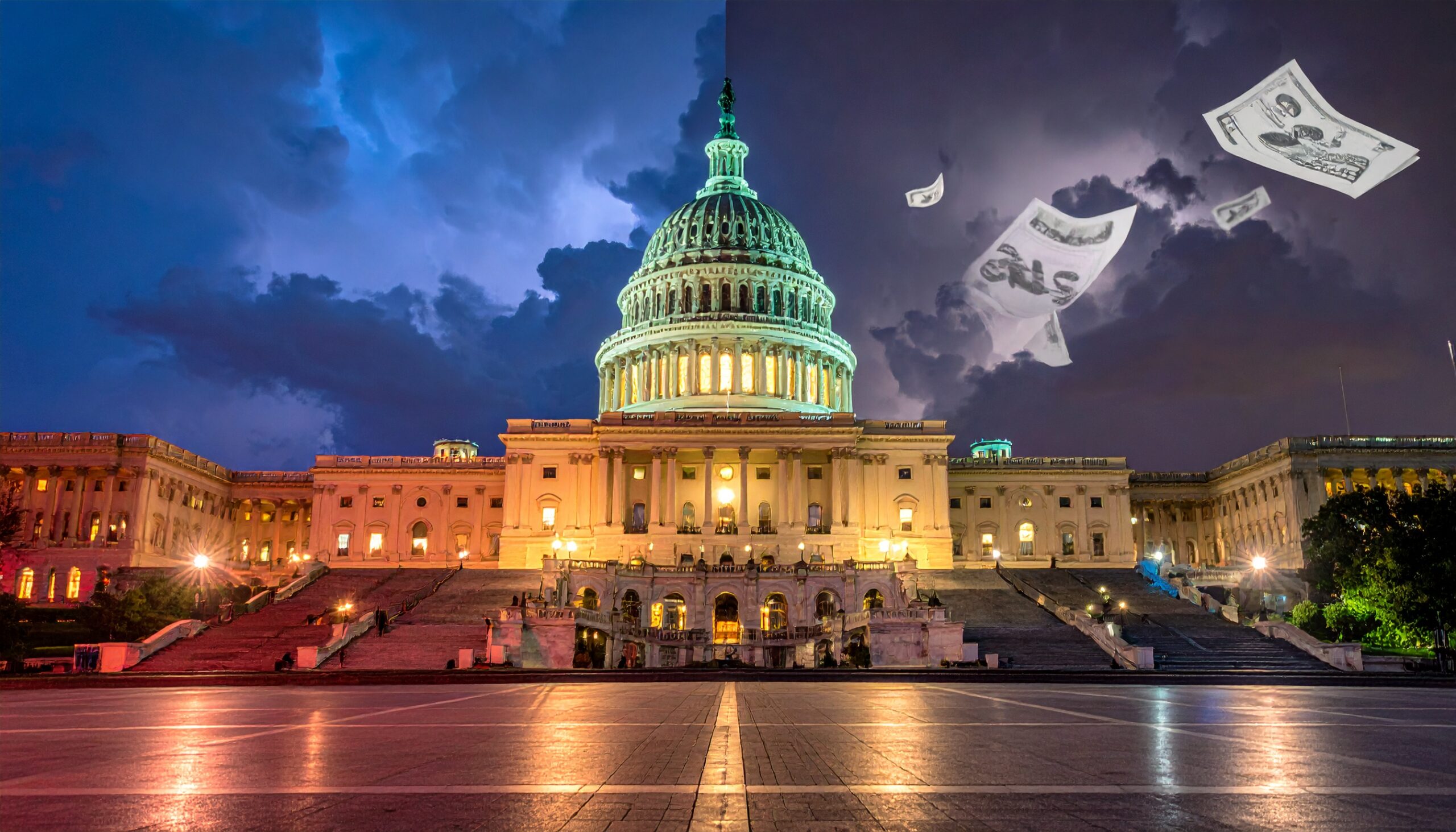
Outlook: Calm Before the Next Storm
Even as government operations begin to stabilize, the political fallout is far from over. The House now faces intense pressure from both the White House and grassroots activists to either approve or reject the deal.
If passed, the temporary funding will buy lawmakers just under three months before another potential standoff in late January — setting up another test of political will in an already volatile election year.
Market analysts and economists are cautiously optimistic. The Dow Jones futures rose slightly in pre-market trading following news of the Senate passage, while Treasury yields stabilized. Still, uncertainty remains high.
“The market’s relief rally is fragile,” warned economist Laura Menendez. “Investors are watching closely for any sign of renewed gridlock.”
Conclusion
The Senate’s passage of the short-term funding bill is a relief for millions of Americans affected by the shutdown — but it’s far from a resolution. The absence of key health care provisions, the intensifying partisan rift, and the looming January deadline ensure that the shutdown saga is only entering its next phase.
Whether the House follows suit will determine if Washington’s temporary truce holds — or if another political storm is on the horizon.