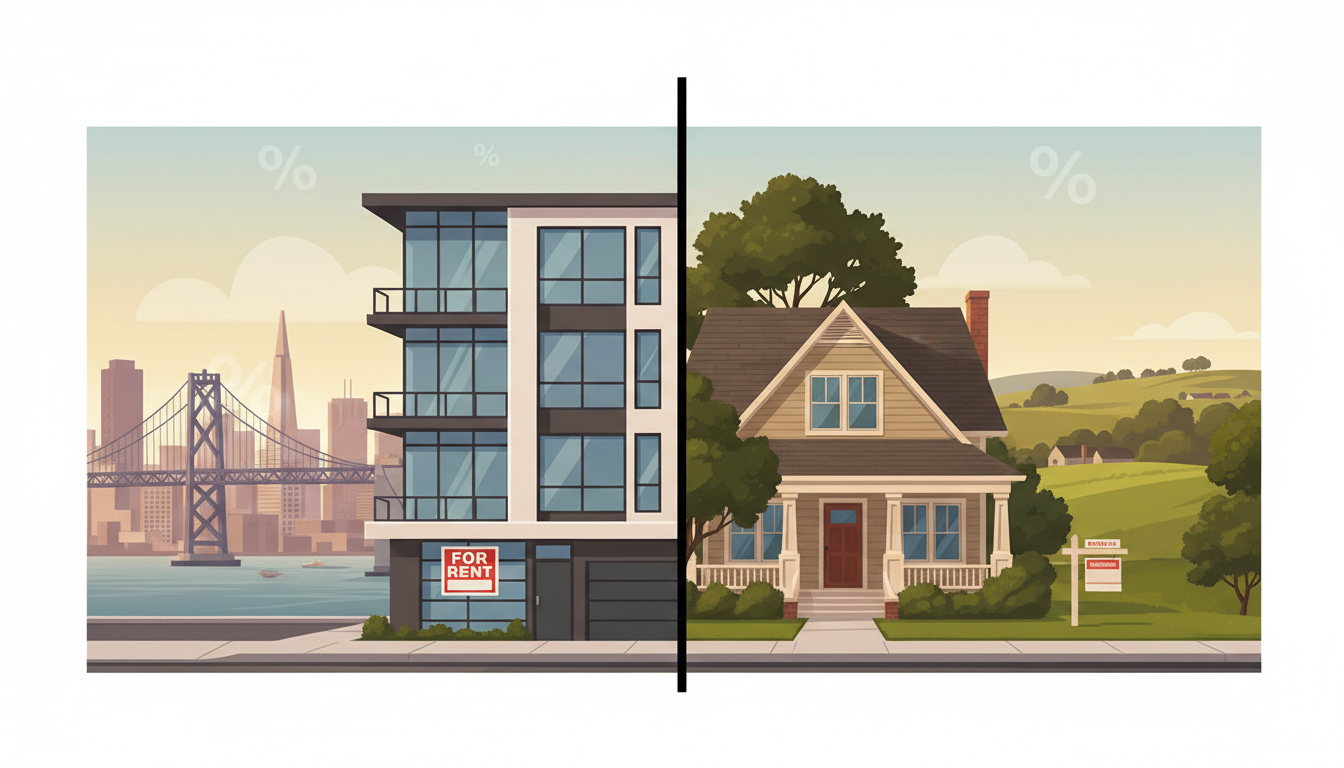






California zoning laws have officially entered a new era.
And now, as a result, the housing market across the Bay Area and other major metros is about to change faster than most people realize.
For years, restrictive local zoning has slowed housing construction.
However, after decades of gridlock, Gov. Gavin Newsom has now signed Senate Bill 79 (SB 79) into law, triggering one of the largest zoning overhauls in modern California history.
As a result, mid-rise apartment buildings will now be allowed near major transit hubs across California’s biggest metro areas.
Most importantly, this law directly targets the state’s historic housing shortage.

Why California Was Forced to Act
For more than a decade, California housing supply has lagged dangerously behind population growth.
Meanwhile, rents have surged.
At the same time, home prices have pushed further out of reach.
Because of this imbalance, affordability collapsed across the state.
Even smaller cities now feel the pressure.
For example, Gilroy rents have now surpassed $2,000 per month:
https://temblog.org/gilroy-rent-trends-december-2025-average-rent-hits-2000/
Likewise, luxury markets continue to surge while mid-tier housing struggles:
https://temblog.org/bay-area-luxury-homes-keep-rising-while-mid-tier-housing-slips-behind/
And at the same time, most future supply is tied directly to major development pipelines:
https://temblog.org/the-new-bay-area-5-mega-projects-reshaping-the-real-estate-landscape-in-2025/
Because of these pressures, Sacramento could no longer delay reform.
What SB 79 Actually Does
SB 79 fundamentally changes where and how housing can be built in California.
Specifically, it allows mid-rise apartment buildings near major public transit stops, even if local zoning previously blocked that density.
As a result:
- Buildings within ½ mile of major transit can reach up to 9 stories
- Buildings slightly farther out can reach up to 4 stories
- Local zoning restrictions are overridden
- Neighborhood objections cannot halt qualifying projects
Therefore, for the first time, transit corridors become true housing growth zones.
Gov. Gavin Newsom stated in his signing message:
“It’s time to build modern, connected communities that fulfill California’s promise.”
Where SB 79 Applies
Although the original bill proposed statewide deployment, lawmakers narrowed the final version.
Now, SB 79 applies only to these eight high-density counties:
- Los Angeles
- San Diego
- Orange
- Santa Clara
- Alameda
- Sacramento
- San Francisco
- San Mateo
Additionally, only properties near:
- Trains
- Subways
- Light rail
- High-frequency bus routes with dedicated lanes
will qualify under the new rules.
Furthermore, a portion of units must still remain affordable, and certain lower-income neighborhoods receive delayed phased-in enforcement.
Why Developers Are Celebrating
Because local zoning fights are notoriously slow, SB 79 dramatically speeds up housing approvals.
As a direct result:
- Developers no longer face multi-year rezoning battles
- Projects near transit become financially viable
- Construction timelines shrink
- Capital re-enters stalled markets
Therefore, this law removes one of the largest bottlenecks in California real estate.
Matthew Lewis of California YIMBY stated:
“This is the most transformative housing legislation ever signed in the state.”
Why Cities and Homeowners Are Panicking
However, while developers celebrate, opposition remains fierce.
Many local governments strongly resisted the law.
For example, Los Angeles Mayor Karen Bass warned that the bill would:
- Erode local control
- Reduce neighborhood input
- Disproportionately affect low-income communities
Likewise, suburban homeowner groups fear permanent neighborhood transformation.
Therefore, while housing supply may rise, political friction will remain intense.
What This Means for Prices
In the short term, prices will not crash.
However, over time, more supply near job centers and transit creates downward pressure on rents and entry-level home prices.
Moreover, transit-accessible housing typically:
- Reduces transportation costs
- Attracts renters first
- Then reshapes buyer demand
Therefore, pricing effects will unfold over multiple years, not months.
Can SB 79 Fix the Housing Crisis Alone?
Not by itself.
Even with zoning unlocked, developers still face:
- High interest rates
- Volatile construction costs
- Labor shortages
- Insurance instability
According to UC Berkeley’s Terner Center for Housing Innovation, SB 79 prepares the ground, but economic conditions must improve before a full construction boom can occur.
As Ben Metcalf stated:
“If costs come down and rates drop, we’ve set the table for a building boom.”
What This Means for Bay Area Buyers and Renters
For buyers, this law signals future competition relief near transit.
For renters, it signals eventual supply relief.
For investors, however, it marks the beginning of a structural shift in land value patterns near BART, rail corridors, and bus rapid transit.
In other words, zoning scarcity around transit is now officially ending.
What Happens Next
Implementation will roll out in phases.
Local governments must adjust compliance plans.
Meanwhile, early rezoning maps will dictate where projects launch first.
As a result, the next 18 to 36 months will quietly reshape the entire transit-housing ecosystem across California.
Official State Sources
California Governor’s Office:
https://www.gov.ca.gov
California Department of Housing & Community Development:
https://www.hcd.ca.gov
California Legislative Information:
https://leginfo.legislature.ca.gov
Final Takeaway
SB 79 represents one of the largest housing law transformations in California history.
While the market will not change overnight, the foundation for long-term supply expansion is now firmly in place.
And for the first time in decades, zoning is no longer the wall it once was.