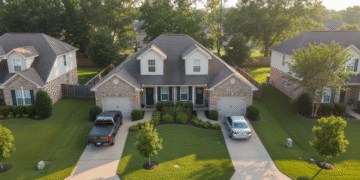






Finding affordable housing in California has become harder than ever. However, despite years of rising rents and shrinking availability, new statewide initiatives are now accelerating the construction of affordable homes. As a result, thousands of residents may soon gain access to more stable housing options.
At the same time, renters continue to feel intense pressure. According to recent market data tracked by Zillow, the average rent in California has now reached roughly $2,750 per month. Therefore, for families, seniors, and essential workers, affordable living is no longer a luxury — it is a necessity.
Because of this growing strain, California has shifted into rapid-build mode.

California Launches Accelerated Affordable Housing Program
In response to the worsening housing shortage, the state expanded the California Surplus Land Program (LGMG). This initiative is led by the Department of General Services and the Department of Housing and Community Development, both of which have confirmed that underutilized state land is now being fast-tracked into developable housing sites.
Most importantly, Governor Gavin Newsom recently announced that six new surplus sites will be converted into at least 843 new housing units statewide, marking one of the most aggressive land-reuse pushes in recent California history.
As a result, the program now delivers both speed and scale — two things California housing has desperately lacked.
How the Surplus Land Program Works
The Surplus Sites Program provides grant-based matching funds to:
- Local governments
- Nonprofit housing developers
- Affordable housing authorities
These funds support both pre-development and construction, allowing projects to move forward without years of bureaucratic delays.
Furthermore, this framework operates under a 2019 executive order that requires the state to identify surplus property, prioritize housing use, and fast-track approvals. Because of this shift, the Department of General Services can now approve projects in under five months, instead of the traditional multi-year timeline.
Consequently, California is now building faster than it has at any point in recent memory.
Nearly 4,300 New Homes Are Already in the Pipeline
Since the executive order took effect, state officials confirm that nearly 4,300 housing units across 32 projects are already in various stages of development.
Several of those communities are already complete, including:
- Sonrisa in Sacramento
- Guardian Village in Fresno County
- Sugar Pine Village in South Lake Tahoe
These early developments show that policy reform is now translating into real housing, not just press releases.
Why the Crisis Became So Severe
Even with this acceleration, the housing shortage remains deeply entrenched.
First, rent levels have surged well beyond wage growth.
Second, mortgage rates remain elevated, limiting homeownership access.
Third, insurance instability across wildfire zones continues to block transactions.
Meanwhile, local affordability pressure continues to spread outward from core metros.
For example, Gilroy rents now exceed $2,000 per month, showing how housing stress has reached even smaller cities:
👉 https://temblog.org/gilroy-rent-trends-december-2025-average-rent-hits-2000/
At the same time, Bay Area luxury markets continue to outperform mid-tier housing, widening wealth gaps across the region:
👉 https://temblog.org/bay-area-luxury-homes-keep-rising-while-mid-tier-housing-slips-behind/
And future housing supply is increasingly tied to large-scale development cycles and zoning approvals:
👉 https://temblog.org/the-new-bay-area-5-mega-projects-reshaping-the-real-estate-landscape-in-2025/
Why This Program Matters Now More Than Ever
The state’s affordable housing push is arriving at a pivotal moment.
Because:
- Rent is rising faster than income
- Homeownership remains blocked by rates
- Many families now spend 50% or more of their income on housing
Therefore, the Surplus Land Program represents one of the only large-scale solutions currently operating at speed.
As Tomiquia Moss, Secretary of the Business, Consumer Services, and Housing Agency, recently stated:
“This model demonstrates how government can act at scale and with speed when it prioritizes housing.”
Final Takeaway
California’s housing shortage is far from solved. However, for the first time in years, momentum is no longer stuck in planning mode.
With:
- Faster approvals
- Targeted land reuse
- Grant-based development funding
- Thousands of units already moving forward
The housing crisis is finally seeing measurable structural action.
Whether this progress outpaces rising demand remains the true test.