



Downtown San Jose continues to wrestle with long-standing vacancy and blight. However, this time, the financial pressure on a property owner is intensifying.
Specifically, the owner of a severely deteriorated commercial building at 98 East San Salvador Street now faces escalating fines if repairs do not move forward quickly.
Meanwhile, city officials are signaling that patience is wearing thin.
At the same time, downtown developers argue that San Jose itself must play a larger role in stopping blight from spreading further.
A Downtown Property in Visible Decline
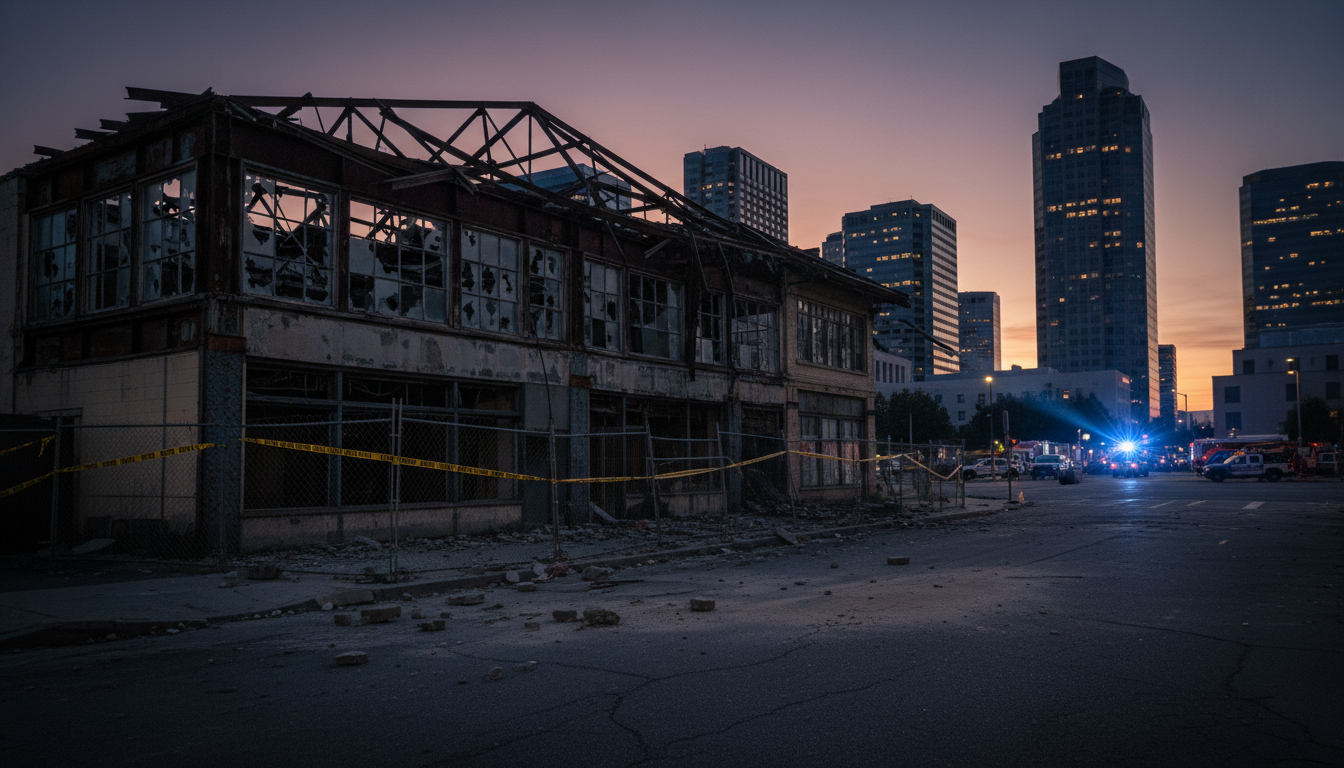
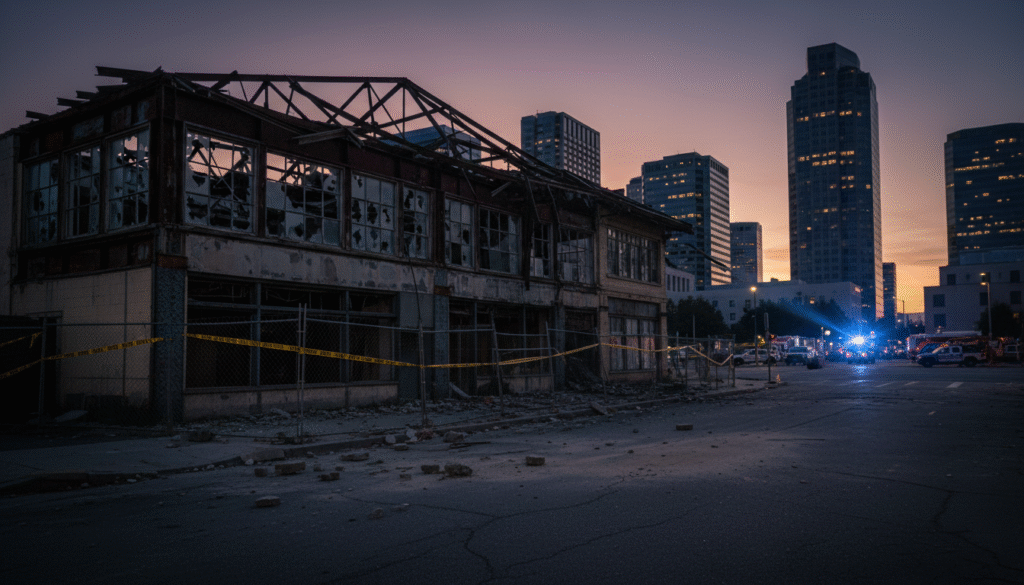
At the center of the dispute sits a vacant retail and commercial building located at 98 East San Salvador Street in the heart of downtown San Jose.
Although the structure has remained empty for months, conditions have recently worsened.
Most notably, the roof has partially collapsed, according to both city officials and a review of aerial imagery.
As a result, the site now presents both a safety hazard and a growing symbol of downtown’s broader vacancy challenges.
Who Owns the Property
The building is owned by an affiliate of Urban Community, a real estate firm led by developers Gary Dillabough and Jeff Arrillaga.
Importantly, the same development team is already deeply involved in major downtown revitalization efforts.
In fact, they have proposed bulldozing the structure entirely as part of a larger plan to build new high-rise housing towers on and near the site.
However, construction has yet to begin.
Until it does, the existing structure remains abandoned.
City Steps In with Fines and Deadlines
Because conditions continued to deteriorate, San Jose code enforcement officials intervened.
During a November 13 hearing before the San Jose Appeals Hearing Board, city officials laid out the growing list of safety concerns.
Among them:
- A collapsing roof
- Ongoing trespassing
- Security threats to nearby areas
As a result, the city imposed an initial fine totaling just under $2,700.
More importantly, however, the city gave the owners a strict deadline of December 14 to correct all outstanding violations.
If conditions do not improve, total fines could climb as high as $500,000 over time.
Owners Say Homeless Activity Is Driving the Blight
At the same hearing, both developers emphasized that homeless activity has fueled much of the damage.
According to Dillabough, people frequently enter the site with shopping carts and tools.
As he described during the hearing:
“People are walking around with saws, drills, and axes. This place is under attack. We are at our wit’s end.”
Moreover, he added that their firm has already invested more than $400 million into downtown San Jose, hoping to restore vibrancy and safety.
Nevertheless, despite adding security, the property continues to suffer damage.
City Officials Say Security Is Not Enough
Although the owners have hired security guards to monitor the site, city officials remain unsatisfied.
According to meeting records, Rachel Roberts, deputy director of San Jose Code Enforcement, made the city’s position clear.
Specifically, she stated:
“Code Enforcement can’t continue to have a vacant building for months on end.”
In other words, temporary protection alone will not resolve the long-term dangers of leaving the structure unused.
Instead, the city now expects permanent structural remediation or demolition.
A Larger Downtown Vacancy Crisis
Importantly, this building is not an isolated case.
In fact, Dillabough estimates that roughly 90 properties remain vacant throughout downtown San Jose.
As a result, downtown faces a ripple effect:
- Reduced foot traffic
- Increased public safety concerns
- Lower investor confidence
- Slower redevelopment momentum
This broader stagnation mirrors regional shifts seen throughout the Bay Area.
For example, luxury homes continue to rise, while mid-tier properties struggle, as detailed in this internal analysis:
👉 https://temblog.org/bay-area-luxury-homes-keep-rising-while-mid-tier-housing-slips-behind/
Meanwhile, large-scale construction still reshapes other parts of the region:
👉 https://temblog.org/the-new-bay-area-5-mega-projects-reshaping-the-real-estate-landscape-in-2025/
City Leadership Changes May Shift the Equation
At the same time, leadership changes may soon influence how aggressively downtown issues are addressed.
Recently, the San Jose Downtown Association appointed Brian Kurtz as its new CEO.
Consequently, Dillabough believes stronger coordination between Kurtz and downtown city manager Michael Lomio could finally accelerate action.
As he put it:
“We need a better partnership between the city and businesses downtown.”
For now, however, enforcement pressure rests squarely on property owners.
What This Means for Downtown San Jose
Taken together, this case highlights the difficult balance between:
- Long-term redevelopment goals
- Immediate public safety risks
- Political pressure around homelessness
- Financial strain tied to prolonged vacancy
Until repairs occur, 98 East San Salvador Street remains both a liability and a warning signal for what can happen when redevelopment stalls.
✅ Final Takeaway
Downtown San Jose’s blight problem is no longer theoretical.
Instead, fines, deadlines, and public scrutiny now force action.
Whether through demolition, redevelopment, or large-scale structural repair, something must change.
Otherwise, this property could soon become one of the most expensive examples of delay in San Jose real estate history.