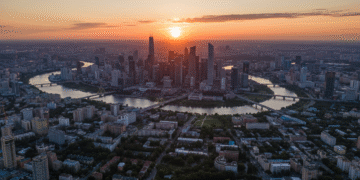




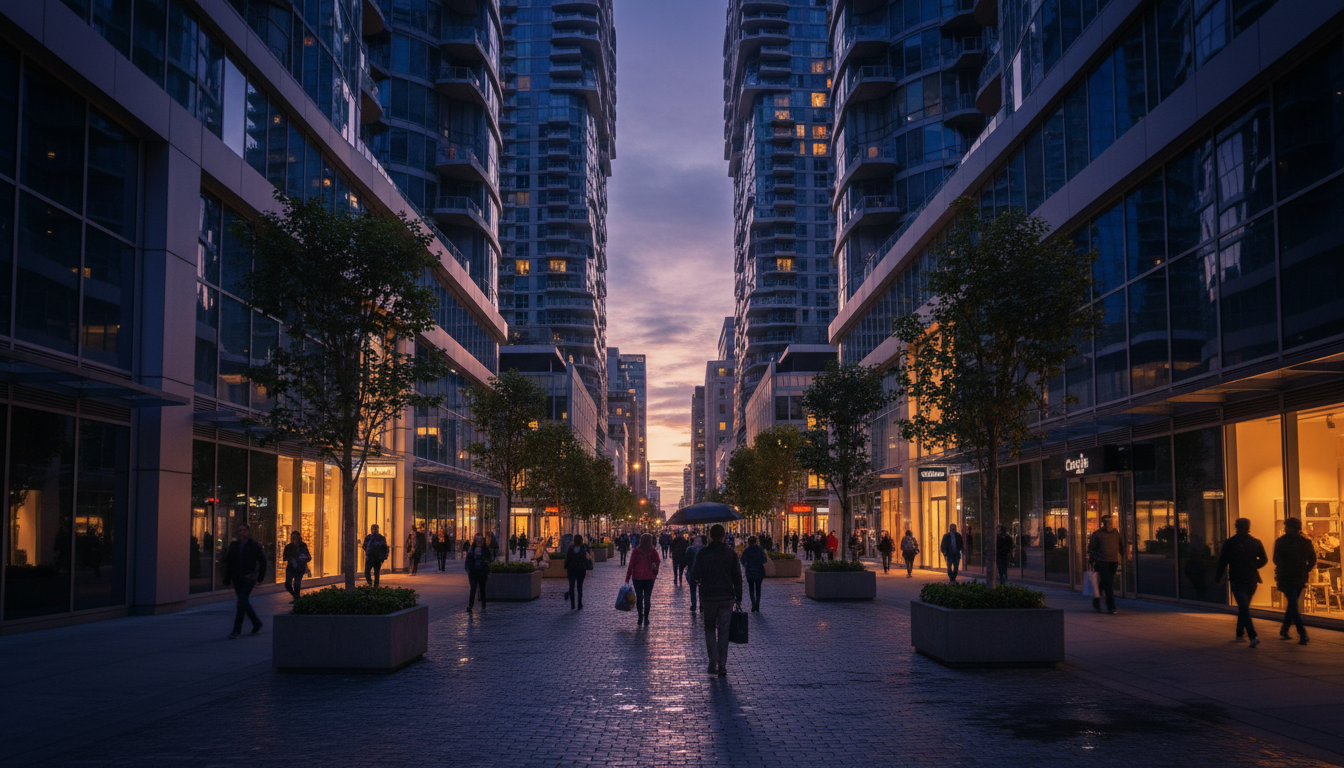
Updated plans for a major mixed-use development in Downtown San Jose are moving forward, as the city’s Planning Director prepares to review revised proposals for 35 South Second Street later this month.
The project, known as Fountain Alley, represents a significant shift from earlier concepts. What was once envisioned as a sculptural office-and-housing complex has now evolved into a pair of residential high-rise towers designed by Bjarke Ingels Group.
The review is scheduled for Wednesday, December 17, and will take place virtually, allowing the public to follow along and provide comment.
A Redesigned Vision Focused on Housing
At its core, the updated Fountain Alley proposal centers on housing density rather than office space.
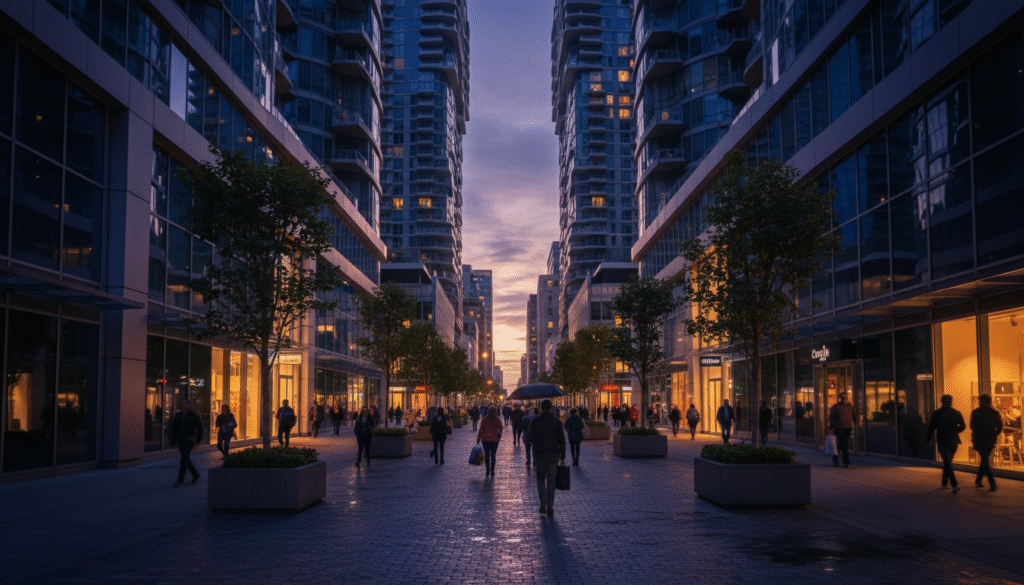
The new plans call for two towers rising 27 and 28 stories, delivering a total of 768 apartments above ground-floor retail. In doing so, the project aligns more closely with San Jose’s broader push to increase downtown residential supply.
Together, the towers would rise to approximately 279 and 289 feet, adding a substantial new presence to the city skyline while reinforcing downtown as a residential hub rather than a purely commercial district.
Part of a Larger Downtown Master Plan
Fountain Alley is not a standalone effort.
Instead, it forms part of a wider downtown master plan led by developers Westbank and Urban Community, whose long-term vision includes nearly 4,000 apartments across multiple sites in the urban core.
At present, the development team is overseeing several major projects downtown, including the Arbor Building, the Bank of Italy tower conversion, Orchard Residential, Terraine, 180 Park Avenue, and 300 South First Street.
However, progress across the portfolio has been uneven.
While demolition and limited excavation began at 180 Park Avenue in 2022, work stalled following an archaeological discovery. More recently, reporting from the Bay Area News Group indicated that Westbank has shifted that site away from office use and toward a residential program with 391 apartments and a data center.
Architecture and Materials
Bjarke Ingels Group returns as the project’s architect, with Bionic serving as landscape architect.
Updated renderings show the two towers wrapped with balconies and integrated greenery, creating a layered façade that softens the building mass. The exterior palette will include aluminum panels, terracotta-toned glass-fiber-reinforced concrete, and expansive curtainwall glazing.
In terms of overall character, the design echoes elements seen in other Westbank-led proposals in San Jose, particularly Orchard Residential and earlier office concepts designed in collaboration with James K.M. Cheng Architects and Steinberg Hart.
Program, Units, and Amenities
The Fountain Alley project would span roughly 831,600 square feet in total.
Of that, approximately 771,400 square feet would be dedicated to residential use, with an additional 10,700 square feet reserved for ground-floor retail. Basement levels would include about 45,000 square feet of parking space.
Residential units are planned in a wide range of layouts to accommodate different household types.
The current mix includes 177 studios, 413 one-bedroom units, 152 two-bedroom units, and 26 three-bedroom homes. Five percent of the apartments would be deed-restricted for very low-income households, achieved through the use of California’s State Density Bonus law.
Bicycle infrastructure is also emphasized, with parking planned for 417 bikes. Details on vehicle parking capacity within the four-level underground garage have not yet been finalized.
Site Context and Engineering Team
The 1.25-acre site sits along South Second Street between Santa Clara Street and San Fernando Street, just around the corner from the historic Bank of Italy tower.
Kier & Wright will serve as civil engineer for the project, while Glotman Simpson is responsible for structural engineering.
What Comes Next
The upcoming Planning Director Hearing on December 17 will determine whether the revised design advances to the next stage of approvals.
The meeting begins at 9 a.m. and will be held via Zoom, with opportunities for public comment. Additional details on participation are available through the City of San Jose’s planning department website.
If approved, Fountain Alley would represent another step toward reshaping Downtown San Jose into a denser, more residential, and more architecturally ambitious urban center.