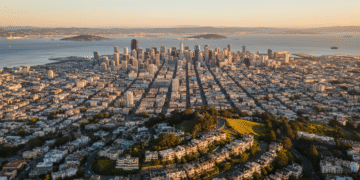





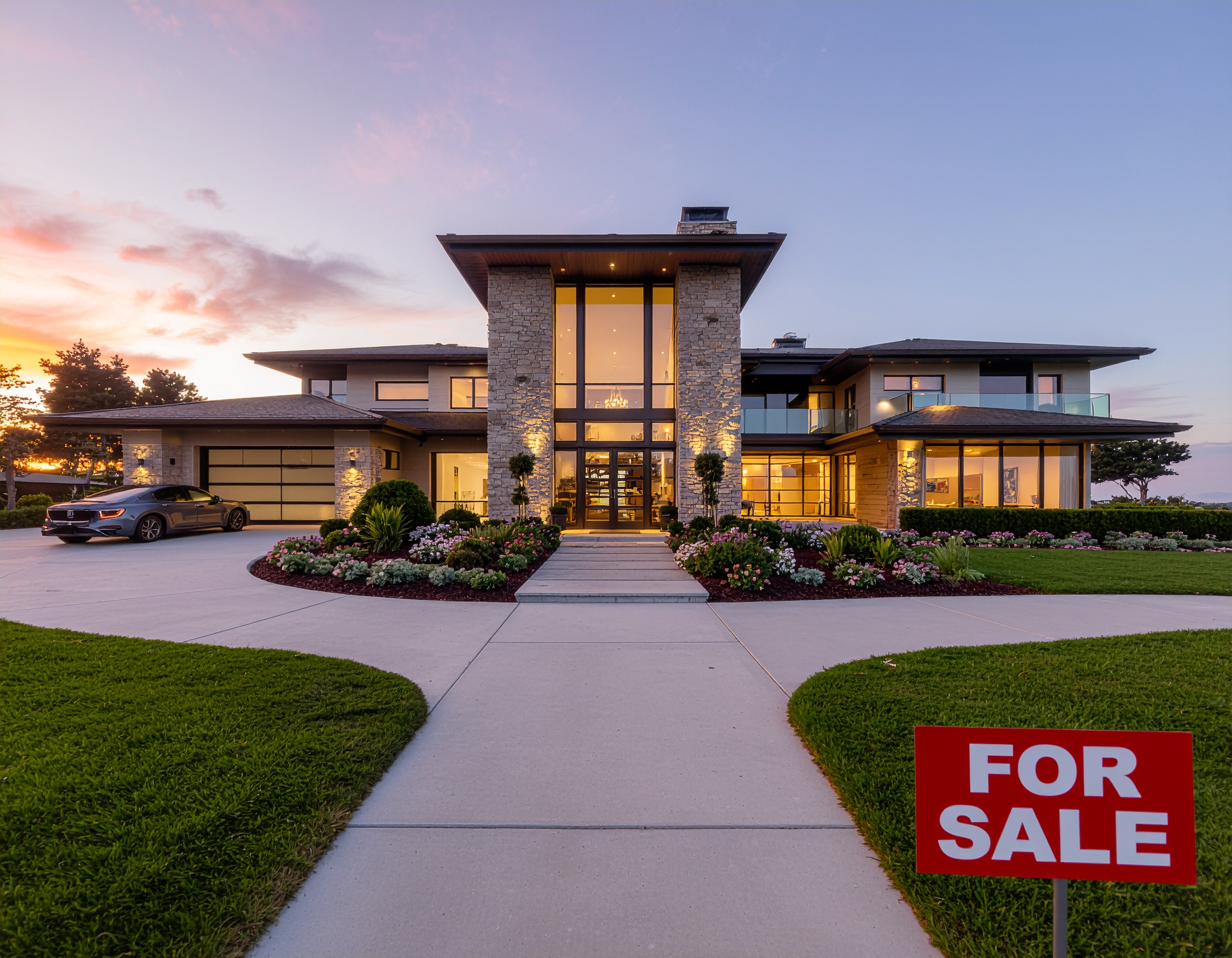
Right now, the Bay Area housing market is splitting in two. On one side, luxury homes are climbing fast. On the other side, mid-tier homes are quietly losing value. As a result, the gap between wealthy buyers and everyday families is widening faster than at any point in recent memory.
Meanwhile, according to recent data from The Real Deal, Redfin, and the San Francisco Chronicle, the divergence is no longer subtle. Instead, it is now impossible to ignore.
Therefore, understanding why Bay Area luxury homes are rising while mid-tier housing slips has become essential for buyers, sellers, and investors alike.
First, the Numbers Show a Clear Luxury Breakout
To begin with, the San Francisco metro area, including San Mateo County, now holds the highest luxury home prices of any large metro in the United States.
Specifically:
- Luxury homes (top 5%) reached a median price of $6.4 million
- That reflects a 5% year-over-year increase
- Meanwhile, mid-tier homes fell to a median of $1.5 million
- That reflects a 1% year-over-year decline
As a result, the two segments are no longer moving together.
Instead, they are officially moving in opposite directions.
You can see this same imbalance across Northern California more broadly in this breakdown of how Bay Area luxury homes keep rising while mid-tier housing slips behind.
Meanwhile, San Jose’s Luxury Market Is Climbing Even Faster
At the same time, the San Jose metro area is seeing an even more dramatic luxury surge.
In fact:
- Luxury homes now carry a median price of $5.6 million
- That represents a 12% annual increase
- It is now the second-highest luxury market in the country
Therefore, while everyday buyers pause, the top end continues accelerating.
So What’s Driving This Luxury Boom?
Next, the most powerful driver behind this surge is what analysts are calling the “tech wealth effect.”
In other words, artificial intelligence profits, IPO windfalls, and stock market gains are injecting massive liquidity into elite buyers.
Accordingly, these buyers are:
- Making all-cash offers
- Using huge down payments
- Avoiding the pain of today’s mortgage rates
As a result, high interest rates barely affect them at all.
Meanwhile, according to Christie’s agent Arrian Binnings, many buyers are now:
“Taking some chips off the table from stock market gains and rotating that money into local real estate.”
Therefore, luxury housing is now functioning more like a capital reserve than simply a place to live.
At the Same Time, Mid-Tier Buyers Are Rate-Locked and Capped
However, while luxury buyers rotate capital, mid-tier buyers face a very different reality.
Most of them are:
- Locked into sub-4% mortgages
- Unwilling to sell and rebuy at 7% rates
- Limited by stricter debt-to-income limits
As a result:
- Supply remains constrained
- Demand weakens
- Prices flatten or fall
Therefore, the middle of the market is being crushed from both sides.
Supply Shortages Are Making the Luxury Market Even Tighter
Meanwhile, in San Francisco, demand for high-end homes continues rising. At the same time, supply continues shrinking.
According to Redfin-based reporting:
- Luxury home sales are up 14% year-over-year
- Luxury inventory is down roughly 4.5%
Consequently, multiple-offer battles are now returning, but only for the wealthy.
Thus, competition intensifies at the top even as the middle cools.
You can track these national luxury and inventory trends directly through Redfin’s public market data:
https://www.redfin.com/news/data-center/
Notable Billion-Dollar Peninsula Deals Prove the Point
In addition, real transaction data confirms the shift.
During late 2025 alone:
- Portola Valley: Villa del Prato sold for $56 million
- Atherton: Marc Andreessen sold his estate for $27 million
- Woodside: The historic Green Gables estate sold for $85 million, setting the yearly Bay Area record
Therefore, this is not speculation.
This is verified capital movement.
For broader local context, the San Francisco Chronicle continues to publish the transaction records used in this analysis:
https://www.sfchronicle.com/
These Communities Are Now the Epicenter of Luxury Growth
As of now, the most intense luxury competition is concentrated in:
- Portola Valley
- Atherton
- Woodside
- Select neighborhoods of San Francisco
Accordingly, these regions now act as global wealth magnets, especially for technology capital.
Meanwhile, Rental Pressure Keeps Expanding Outside the Core
At the same time, affordability pressure continues radiating outward.
For example, in Gilroy:
- Average rent recently crossed the $2,000 level
You can see the full rental shift here:
https://temblog.org/gilroy-rent-trends-december-2025-average-rent-hits-2000/
Therefore, even areas once considered affordable now feel the spillover from Bay Area pricing power.
Development Projects Will Likely Worsen the Divide
Furthermore, several mega-projects now underway are likely to strengthen luxury dominance rather than relieve pressure on the middle.
For example:
https://temblog.org/the-new-bay-area-5-mega-projects-reshaping-the-real-estate-landscape-in-2025/
These developments focus heavily on:
- Tech-adjacent offices
- Premium mixed-use districts
- High-end residential corridors
As a result, infrastructure investment is increasingly aligned with elite demand, not mass affordability.
So Why Is This Market Now Breaking into Two?
To summarize the forces at work:
- Tech wealth is accelerating faster than wages
- Luxury buyers are immune to high rates
- Mid-tier buyers are rate-locked and capped
- Inventory is shrinking at the top
- Development is reinforcing prestige zones
- Rental pressure is spreading outward
As a result, the market no longer behaves as one system.
Instead, it behaves as two separate financial classes operating on different rules.
What This Means for Buyers, Sellers, and Investors
For buyers, this means:
- Entry-level and mid-tier opportunities will remain limited
- Competition will stay selective rather than broad
- Waiting for “normal” may take years
For sellers, this means:
- Mid-tier sellers face longer listings and weaker offers
- Luxury sellers see strong demand but limited buyer pools
- Correct pricing matters more than ever
For investors, this means:
- Capital continues clustering at the top
- Yield-focused strategies must move outward
- Regional diversification matters more than timing
Final Takeaway: The Bay Area No Longer Has One Housing Market
Ultimately, the 2025 data shows something undeniable.
The Bay Area no longer has one unified housing market.
Instead, it has:
- A capital-driven luxury market exploding upward
- And a rate-restricted mid-tier market grinding sideways or down
Therefore, whether you are a homeowner, buyer, developer, or investor, understanding which side of the divide you operate on now matters more than ever.
Because from here forward, these two paths will continue separating.