




By Michael Torres, Chief Editor
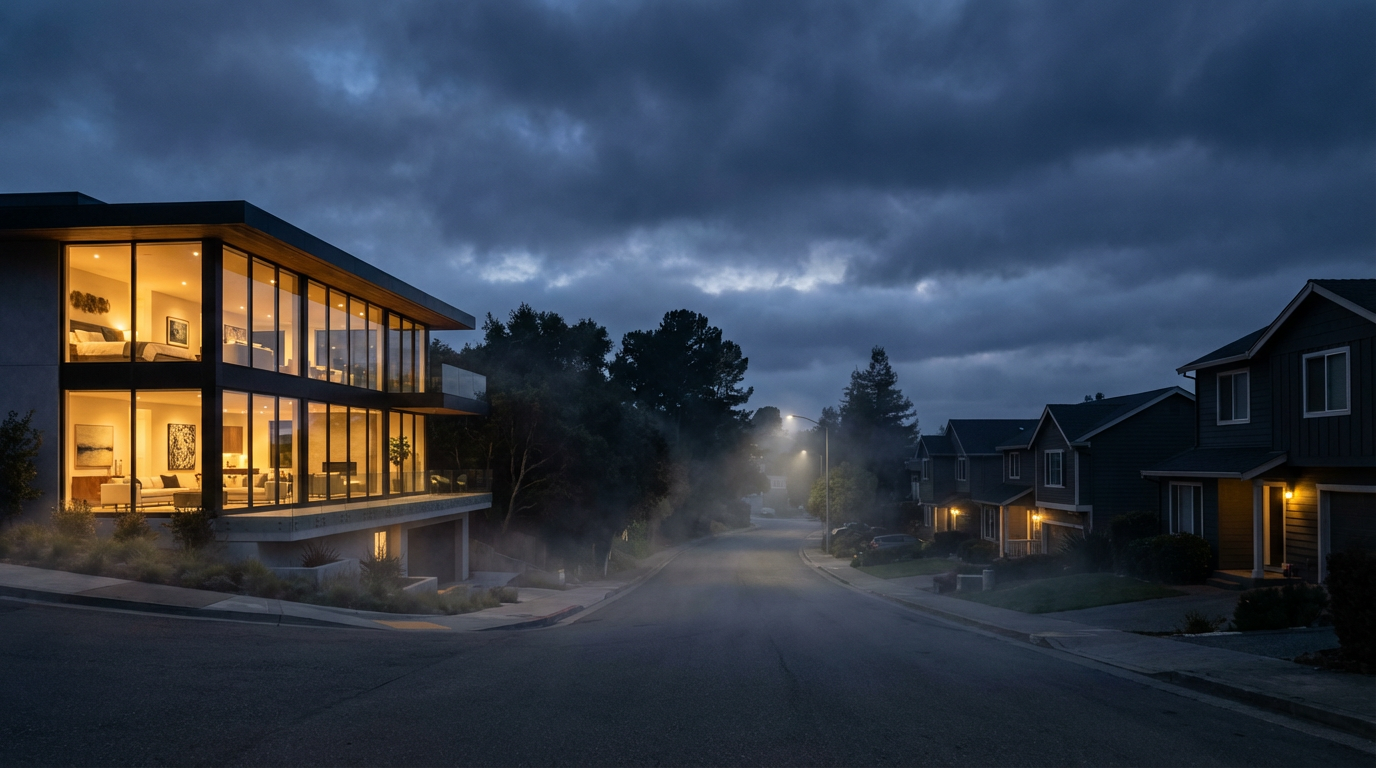
The Bay Area housing market is no longer moving as a single system. Data from late 2025 reveals a widening divide between ultra luxury properties and the rest of the market, creating what many analysts now describe as two completely different housing economies operating under the same regional label.
While headline numbers often suggest cooling across most price ranges, the highest end of the market continues to climb aggressively. This divergence is most visible in the two most powerful housing corridors in Northern California, San Francisco and Silicon Valley.
Luxury Homes Surge While Mid Tier Homes Stall
Across the San Francisco metro region, which includes San Francisco and San Mateo County, luxury homes in the top five percent of the market are now selling at a median price of approximately six point four million dollars. That represents a year over year increase of roughly five percent despite high interest rates and ongoing affordability concerns.
In contrast, mid tier homes in the same region have slipped slightly. The median price for these properties now sits near one point five million dollars, down one percent from last year. While that decline may appear modest, it signals stalled momentum in a market that once moved in sync with the luxury segment.
San Jose shows a similar but more amplified pattern. The luxury home segment now holds a median value near five point six million dollars, placing it among the most expensive luxury housing markets in the entire country. These properties posted a twelve percent annual increase. That level of growth would normally be associated with a booming overall market, yet many standard home buyers continue to struggle.
In much of the rest of the Bay Area, even high tier homes outside of elite enclaves have seen value softness over the past year. This reveals that the surge is not regional across all upper segments but concentrated in very specific wealth driven micro markets.
The Tech Wealth Effect Is Driving the Divide
Agents working in the top end of the market consistently point to one dominant force behind the continued price acceleration: technology wealth. Liquidity generated from stock compensation, artificial intelligence investment gains, and corporate expansion has transferred enormous buying power into the hands of a narrow group of buyers.
Many of these buyers are not dependent on traditional financing. Large down payments and all cash purchases have become common in luxury transactions across Peninsula communities such as Atherton, Woodside, and Portola Valley. Supply in these zones remains highly restricted by geography and zoning laws, intensifying competition even as overall housing demand softens.
Unlike conventional buyers, luxury purchasers are far less sensitive to mortgage rates. Their purchasing behavior is driven by access to capital rather than debt affordability. This creates insulation from the same pressures that are suppressing mid tier sales.
At the same time, luxury demand remains responsive to broader economic signals. Trade tariffs, equity market volatility, and global uncertainty can still cause temporary pauses at the highest price points. However these slowdowns tend to be brief, followed by renewed competition once market confidence stabilizes.
Condos and Middle Income Buyers Face the Most Pressure
The weakest segment of the current housing cycle has been condominiums and lower to middle tier entry level properties. Rising homeowners association fees have pushed many condo buyers out of the market entirely. Combined with high insurance costs and elevated mortgage rates, affordability has collapsed for large portions of the first time buyer population.
Cities with heavy condo inventory have experienced some of the steepest corrections. Buyers who once relied on condos as the primary point of market entry now face monthly ownership costs that often exceed single family rental payments. This has forced many into extended renting cycles or relocation to outer suburbs.
Despite this pressure, demand has not disappeared. Instead, purchasing power has eroded. Many households remain financially capable in terms of income but are blocked by financing burdens, insurance premiums, and upfront costs that far exceed pre pandemic norms.
A Thawing Market at the Extreme High End
While mid tier buyers remain constrained, the climate on the mansion end of the spectrum has begun heating up again. Some luxury agents now report difficulty sourcing enough inventory to meet buyer demand. This reflects a renewed confidence among capital rich households that the artificial intelligence economy is entering a fresh expansion cycle.
This thaw contrasts sharply with the experience of standard buyers who are still navigating rate pressure, affordability math, and long term uncertainty. The psychological divide between these two buyer groups has grown just as wide as the financial gap.
The Bifurcated Boom Reshaping Bay Area Real Estate
What has emerged is not simply a luxury rebound but a true market bifurcation. Two parallel housing systems now operate side by side but respond to entirely different economic forces.
The first is the capital rich enclave economy. These markets are powered by equity wealth, technology liquidity, and geographic scarcity. Prices rise not because homes are needed for shelter but because they function as wealth storage and status assets. Higher prices often reinforce demand rather than suppress it.
The second is the debt dependent general economy. This includes most suburban homes, entry level units, and condos. Prices here rise or fall based on affordability, financing costs, wages, and insurance. Demand remains present but purchasing power is capped.
This dynamic is amplifying the regional wealth gap. Middle income households face rising barriers just as the most exclusive communities become even more detached from economic reality.
What This Means for the Future
If present trends continue, the term Bay Area housing market may become increasingly misleading. A six point four million dollar estate in Atherton and a one point five million dollar home in a broader San Francisco neighborhood are now governed by completely different financial forces.
Without a major shift in financing conditions or housing supply, this divide is likely to deepen. The artificial intelligence driven capital surge is not lifting the entire market. It is concentrating wealth in narrow tiers and reshaping demand around liquidity rather than need.
For buyers, sellers, and investors alike, understanding which side of this divide a property belongs to is now more important than ever.




Comments 3