





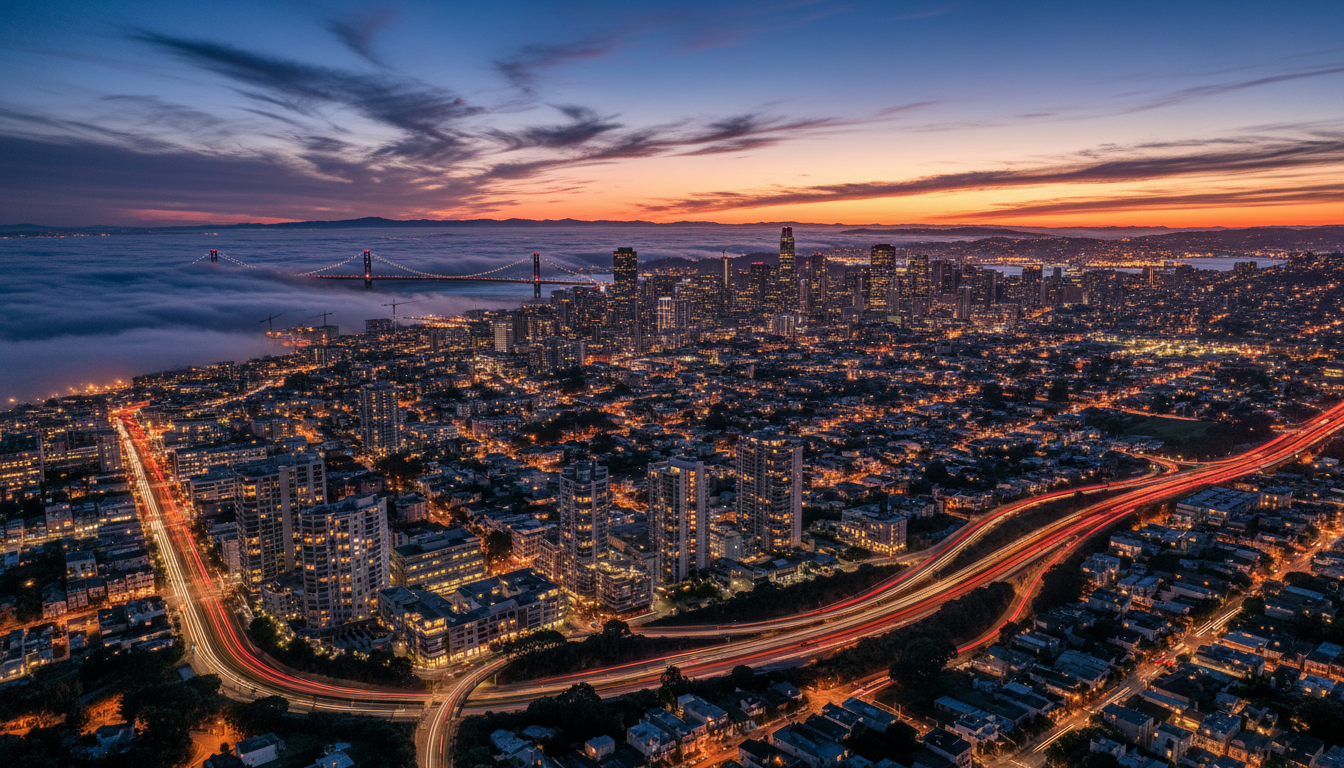
The Bay Area housing market is heating up again — and this time, the momentum is real.
However, unlike past cycles, today’s surge is being fueled by AI-driven income growth, shrinking inventory, faster sales timelines, and a gradual return to offices across Silicon Valley.
At the same time, mortgage rates near 6.2%, combined with declining condo prices in select cities, are pulling sidelined buyers back into the market. As a result, demand is rising even as supply contracts — a dangerous combination for affordability.
Let’s break down what’s happening right now and why this market matters moving forward.

Pending Home Sales Are Exploding in San Francisco
First and foremost, pending home sales in San Francisco jumped 17.1% year-over-year, the largest increase of any major U.S. metro.
Meanwhile, across the rest of the country, pending sales rose less than 1%.
This shows, clearly and undeniably, that buyer urgency is returning specifically to the Bay Area — not the broader national market.
As a result, competition is rising again.
Homes Are Selling at Record Speed Across Silicon Valley
At the same time, homes are selling faster than anywhere else in the country:
- San Jose: 19 days median time on market
- San Francisco: 21 days median
- National Average: 50 days
Furthermore, nearly half of all homes in San Jose (48.5%) sold within just two weeks, a massive jump from only 16.8% last year.
Therefore, speed is now becoming the defining characteristic of the Bay Area market once again.
Buyer Power Is Shrinking Fast in San Francisco
Across the U.S., there are currently 36.7% more sellers than buyers.
However, in San Francisco, that gap has collapsed to only 10.2%.
Earlier this year, that same gap was over 47%.
In other words, negotiating leverage is rapidly shifting away from buyers — and toward sellers — right before the 2026 cycle begins.
Why the Market Is Heating Up Again
✅ 1. Mortgage Rates Are Stabilizing
Mortgage rates have fallen from nearly 7% to around 6.2%.
While that drop may look small, on a $2M Bay Area home, it dramatically reduces monthly payments.
As a result, buyers who were frozen by rate fear are now re-entering the market.
✅ 2. AI Wealth Is Reshaping Demand
Silicon Valley continues to absorb AI companies like OpenAI and Anthropic, delivering:
- Large signing bonuses
- Rapid income growth
- Stock-based compensation
Therefore, young tech workers now have significantly more purchasing power than in 2023–2024.
✅ 3. Return-to-Office Has Reignited Urban Demand
San Francisco office visits jumped 19% year-over-year, the largest increase of any major business district.
Because of this shift, housing demand near job centers is accelerating again, reversing the post-pandemic exodus.
✅ 4. Inventory Is Quietly Shrinking
Active listings dropped:
- San Francisco: –7.7%
- San Jose: –6%
Meanwhile, many homeowners are refusing to sell until prices rise further, creating artificial scarcity.
As a result, buyers are now competing over fewer homes.
Prices Are Stabilizing — Not Crashing
Despite national cooling trends, Bay Area pricing remains resilient:
- San Francisco: –0.7% YoY
- Oakland: –1.3% YoY
- San Jose: +6.9% YoY
Additionally, falling condo prices are masking the strength of single-family home demand, which has remained surprisingly stable.
What This Means for Buyers Right Now
If you’re waiting for a collapse, here’s the truth:
- Inventory is tight
- Sales speed is accelerating
- Buyer leverage is shrinking
- Wealth-driven demand is increasing
Therefore, waiting may now carry more risk than acting.
What This Means for Sellers
On the other hand, sellers finally have:
- Faster sales
- Better pricing power
- Lower negotiating pressure
- Reduced inventory competition
Thus, well-priced homes are regaining momentum, especially in tech-heavy corridors.
Local Market Cross-Trends You Should Track
These related trends are shaping the West Coast housing economy right now:
- Gilroy rent just crossed $2,000/month, showing rising affordability strain
👉 https://temblog.org/gilroy-rent-trends-december-2025-average-rent-hits-2000/ - Luxury homes across the Bay Area continue to outperform mid-tier housing
👉 https://temblog.org/bay-area-luxury-homes-keep-rising-while-mid-tier-housing-slips-behind/ - Major Bay Area mega-projects are reshaping future housing supply
👉 https://temblog.org/the-new-bay-area-5-mega-projects-reshaping-the-real-estate-landscape-in-2025/
External Data Sources Used for This Report
- Redfin Housing Market Data
https://www.redfin.com/news - Placer.ai Office Foot Traffic Tracking
https://www.placer.ai - National Housing Statistics
https://www.nar.realtor
Final Market Outlook
In conclusion, the Bay Area housing market is not cooling anymore — it is transitioning into a new acceleration phase.
Although mortgage affordability remains strained, AI wealth, inventory shortages, and job-center demand are overpowering national slowdown trends.
As a result, buyers should prepare for:
- Faster transactions
- Tighter negotiations
- Rising competition in 2026
And sellers should recognize:
- Their leverage is quietly returning
- Pricing power is rebuilding
- Days of massive discounts are fading




Comments 2