




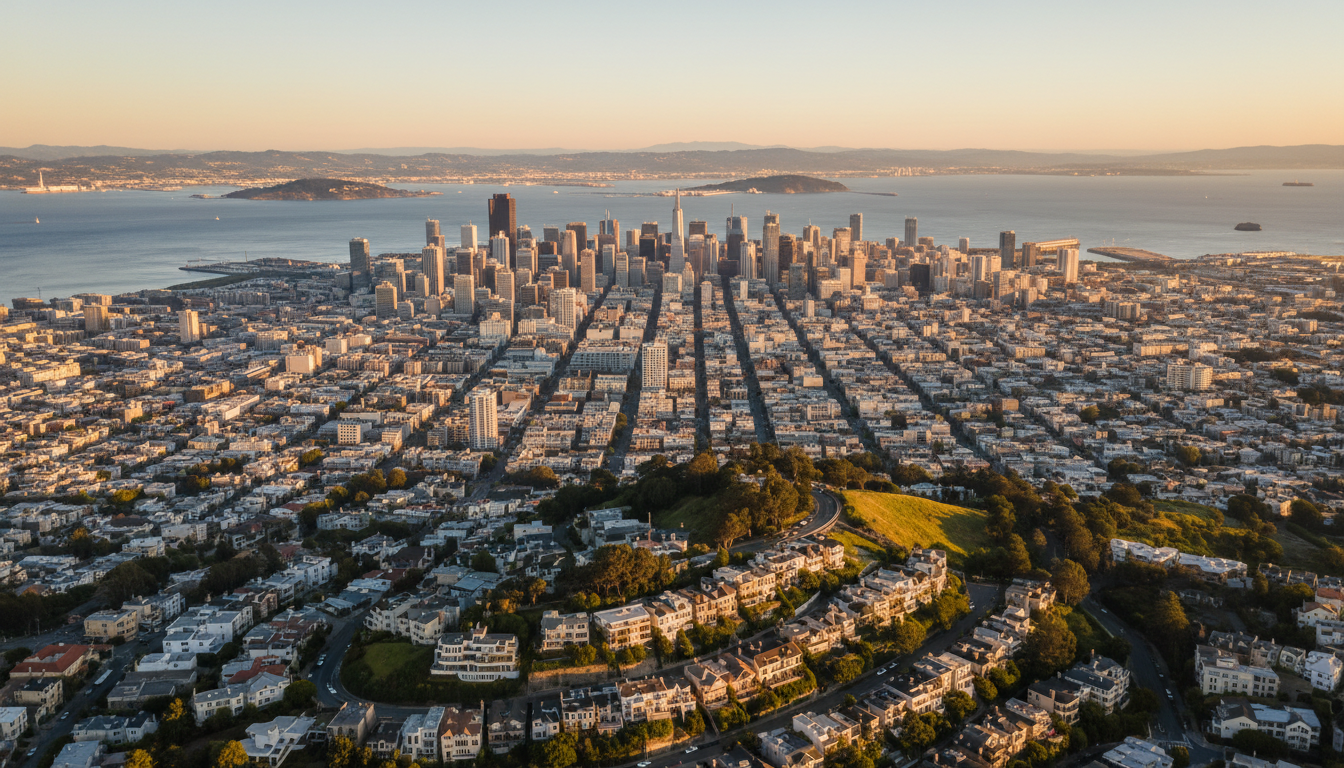
San Francisco’s luxury real-estate market has officially flipped the script.
What once felt like a post-pandemic ghost town is now rapidly transforming into a high-stakes gold rush—especially at the ultra-prime end of the housing market.
And at the center of it all?
Artificial intelligence.
From Urban Decline to Ultra-Luxury Revival
Not long ago, headlines focused on declining populations, empty offices, and falling home values across San Francisco.
However, that narrative is now changing—fast.
According to Sotheby’s International Realty’s 2025 Mid-Year Luxury Outlook, San Francisco recorded more home sales above $20 million than any year on record.
That surge marks a dramatic turnaround.
More importantly, it signals renewed confidence in the city’s long-term future.
Why A.I. Is Fueling the Comeback
So, what changed?
In one word: A.I.
The explosive rise of artificial intelligence has created a new class of ultra-wealthy founders, engineers, and investors—many of whom want to live near the epicenter of innovation.
San Francisco, once again, fits that role perfectly.
“The thought is that the A.I. space is going to be the next major source of wealth creation in the global economy,”
— Bradley Nelson, Chief Marketing Officer, Sotheby’s International Realty (via Bloomberg)
In other words, proximity matters.
And for those betting big on artificial intelligence, the Bay Area is still unmatched.
San Francisco’s Magnetic Advantage
San Francisco remains home to:
- OpenAI (creator of ChatGPT)
- Dozens of leading A.I. startups
- Elite research labs
- A dense, highly specialized technical labor pool
As Nelson explained, many tech entrepreneurs see being physically present in the Bay Area as a strategic advantage—not a lifestyle choice.
That mindset is translating directly into real-estate demand.
Record-Breaking Deals Signal Long-Term Commitment
This isn’t just speculative buying.
In fact, many ultra-wealthy buyers are making deep, long-term investments in their properties.
One of the most talked-about examples?
A reported $70 million purchase by Laurene Powell Jobs on San Francisco’s iconic Billionaire’s Row.
Additionally, Sotheby’s reports that buyers are frequently:
- Purchasing estates above $20M
- Spending millions more on custom, multi-year renovations
- Clearly signaling plans to live in the city, not flip properties
That behavior suggests something important.
This is not a short-term bounce—it’s a structural shift.
A “Safe Haven” Market Returns
According to Nelson, luxury real estate in 2025 has “stepped out as the perennial safe haven.”
That label matters.
Ultra-high-net-worth buyers tend to move early—and their behavior often foreshadows broader market confidence.
Some credit for the city’s revival is also being attributed to recent political leadership changes, including newly elected Mayor Daniel Lurie, whose administration is seen as more business-friendly.
How This Fits the Broader Bay Area Story
San Francisco’s luxury resurgence doesn’t exist in isolation.
Across the region, major infrastructure and development projects are reshaping the long-term outlook for Bay Area real estate.
👉 Related:
The New Bay Area: 5 Mega Projects Reshaping the Real Estate Landscape in 2025
At the same time, weekly housing data shows improving buyer confidence—even as affordability remains a challenge.
👉 Also Read:
Bay Area Housing Market Update: Prices, Inventory & Buyer Demand
Together, these trends paint a clear picture:
Capital is returning to the Bay Area—but selectively.
Luxury Markets Rising Beyond San Francisco
San Francisco isn’t alone in this trend.
According to Sotheby’s report:
- New York City saw a 115% increase in sales of homes priced at $10 million and above
- Deer Valley, Utah recorded 15 sales above $15 million, setting a new state record
These markets share a common theme: scarcity, prestige, and long-term desirability.
Still, San Francisco stands apart due to its role as the global nerve center for artificial intelligence.
What This Means Going Forward
The return of ultra-prime buyers signals more than just higher price tags.
It suggests:
- Renewed belief in San Francisco’s economic relevance
- Confidence in A.I. as a long-term wealth engine
- A recalibration—not a collapse—of the city’s housing market
For investors, developers, and homeowners alike, this shift is worth watching closely.
Because when the smartest money moves first, the rest of the market often follows.