





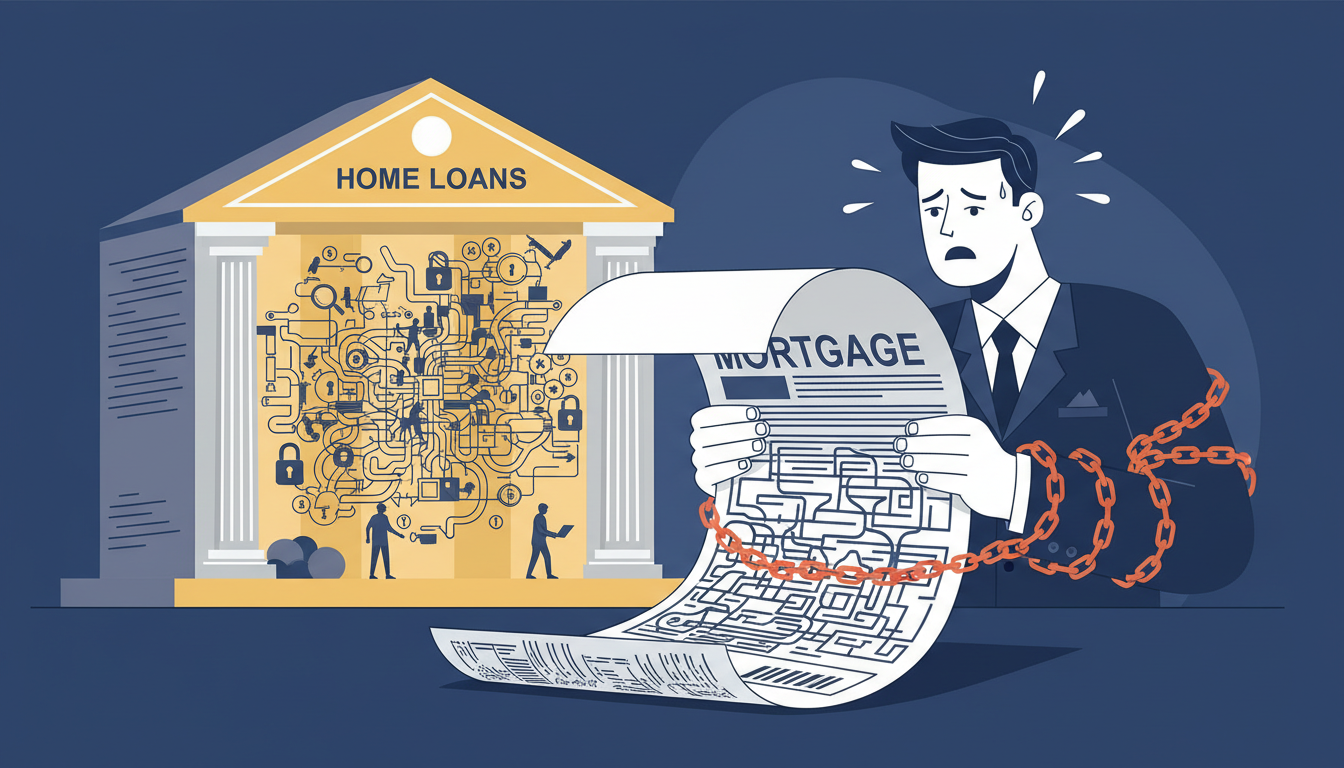
Mortgage lending looks transparent on the surface. Rates are published. Guidelines are public. Pre-approvals feel official.
However, in 2025, the real risks often hide in the fine print, not the headline rate.
Behind every approval decision sits a maze of lender “overlays,” automated systems, hedging costs, and pricing adjustments that most borrowers never see. As a result, many buyers overpay, lose leverage, or get delayed at the worst possible moment.
Here are four realities most lenders won’t explain clearly, plus a critical fifth truth that now affects nearly every buyer.
1. You Can Get a Better Deal (or Even an Approval) Somewhere Else
Many buyers assume mortgage rules are uniform. They are not.
While Fannie Mae and Freddie Mac publish national guidelines, each lender applies its own internal rules called “overlays.” These overlays often make approvals far stricter than the federal minimums.
What This Looks Like in 2025
Fannie Mae technically allows:
- Debt-to-Income (DTI) ratios up to 50% on manually underwritten loans
However, in practice:
- Many large banks cap DTI at 45% or lower
- Some credit unions cap it at 43%
That means a borrower who actually qualifies under federal guidelines can still be declined by a big bank.
The Broker vs. Bank Difference
Mortgage brokers and non-bank direct lenders typically work with dozens of wholesale lenders at once. Each lender has different overlays.
As a result, a broker can often match you with:
- A lender flexible with self-employed income
- A lender that accepts higher DTIs
- A lender comfortable with condos or mixed-use properties
Meanwhile, a single bank is limited to its own rulebook.
New in 2025: The Rise of Non-QM Loans
Non-QM (Non-Qualified Mortgage) loans have expanded rapidly since 2023. These allow:
- Bank statement income instead of tax returns
- Asset-based qualifying
- Interest-only structures for investors
Most major banks still do not offer these products.
What lenders usually will not say:
“Our automated system declined you, but a broker or portfolio lender may be able to approve you.”
2. Time Is Not Your Friend, and Lock Extensions Are Brutally Expensive
Interest rate locks feel simple. You lock a rate. You close. Done.
In reality, rate locks are one of the most misunderstood and expensive risks in the entire mortgage process.
The 2025 Rate Lock Reality
With interest rates fluctuating in the:
- 6% to 7% range,
lenders are aggressively hedging every locked loan in the secondary market.
When your file closes late and rates moved up during your lock period, the lender absorbs a loss when they sell your loan. The extension fee transfers that loss directly to you.
What Extensions Cost in 2025
For a typical 15-day extension:
- 0.125% to 0.50% of the loan balance
- On a $300,000 loan:
- That equals $375 to $1,500
And this fee is often non-refundable.
What lenders usually will not say:
“If you delay documents for even two days, you are risking a four-figure extension fee.”
Pro Tip for 2025 Borrowers
Some lenders now offer:
- Lock-and-shop programs
- 60–90 day locks
These cost more upfront but provide protection in competitive or delayed closings.
3. You Need Significant Equity or a Large Down Payment for the Best Pricing
The interest rate advertised on your quote is only part of the cost.
Behind it sits a system called Loan-Level Price Adjustments (LLPAs) imposed by Fannie Mae and Freddie Mac.
These fees change based on:
- Credit score
- Down payment
- Loan type
The 2025 Pricing Reality
The best pricing tier typically requires:
- 20% down or more (80% LTV or lower)
- Credit score above 740
Now compare that to:
- 5% down
- 700 credit score
That borrower will often pay:
- Thousands more in upfront fees, or
- A rate equivalent to 0.5% higher
What Many Borrowers Never Get Shown
Example:
- 5% down → $4,000 LLPA
- 10% down → $1,000 LLPA
That’s a $3,000 swing that many lenders never proactively show.
New 2025 Jumbo Loan Reality
For mortgage balances above:
- $1,149,825 in most high-cost areas
Pricing becomes even steeper. Many jumbo tiers require:
- 10–20% minimum down
- Higher reserves
- Stronger credit
What lenders usually will not say:
“You technically qualify at 5% down, but bringing more cash would save you tens of thousands over the life of the loan.”
4. Appraisers and Automated Systems Hold All the Power
Borrowers often think lenders influence appraisals.
In 2025, they absolutely do not.
How Appraisals Really Work Now
All appraisals must comply with Appraisal Independence Requirements (AIR). This means:
- The lender cannot select the appraiser
- Orders go through an Appraisal Management Company (AMC)
- The appraiser is assigned randomly
The lender cannot influence value, timing, or outcome.
The Low Appraisal Risk
In shifting markets, low appraisals have become one of the most common closing failures.
Even a:
- $10,000 valuation gap
can derail a deal if the buyer lacks extra cash.
The Only Real Remedy: Reconsideration of Value (ROV)
If the appraisal comes in low, the only option is a formal ROV request.
This requires:
- Closed sales from the same neighborhood
- Better, newer, and stronger comps than what the appraiser used
Success rates vary widely and depend entirely on the strength of the new data.
What lenders usually will not say:
“If this appraisal is low, our hands are tied unless your agent finds better actual sales immediately.”
5. Your Pre-Approval Is Less Powerful Than You Think (The New 2025 Risk)
Many buyers believe a pre-approval equals full loan approval.
It does not.
What Most Pre-Approvals Really Are
In 2025, many pre-approvals are based on:
- Automated underwriting systems
- Limited document review
- Self-reported income
- Basic credit pulls
The full underwrite does not occur until after you are under contract.
The Hidden Risk: Underwriter Conditions
Once the file reaches final underwriting, new demands often appear:
- Verification of a large deposit from months earlier
- Letters explaining job gaps
- Profit-and-loss statements for self-employed buyers
- Additional reserve requirements
These late-stage conditions can delay or even cancel closings.
What lenders usually will not say:
“This pre-approval is not final approval. The real test starts after your contract is signed.”
Final Takeaway
In 2025, mortgage lending is:
- More automated
- More heavily adjusted by risk pricing
- More sensitive to timing
- Less flexible than most buyers realize
The headline rate almost never tells the full story.
The borrowers who win are the ones who:
- Compare lenders aggressively
- Understand overlays
- Lock intelligently
- Preserve appraisal leverage
- And prepare for full underwriting early
For everyone else, surprises tend to appear at the worst possible moment, right before closing.